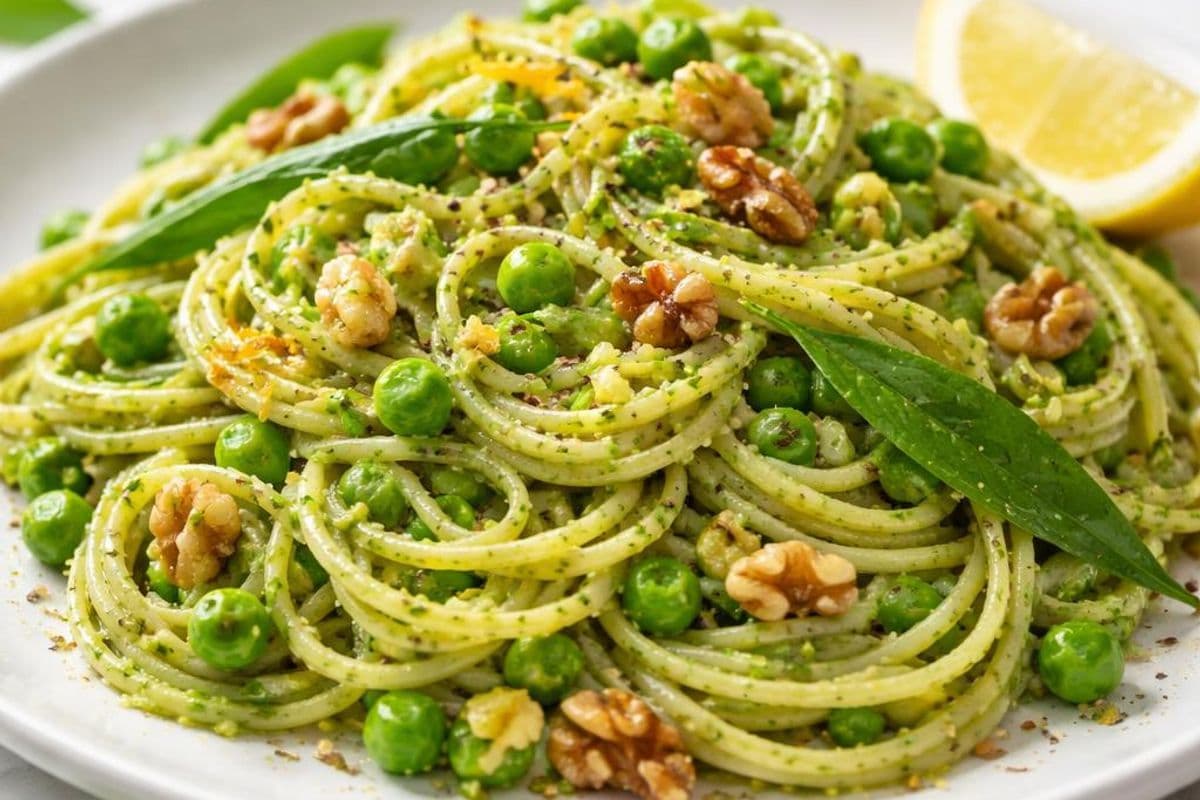
Wild garlic pesto pasta with peas, lemon and toasted walnuts
Vibrant wild garlic pesto tossed through glossy pasta with sweet peas, toasted walnuts and a bright lemon finish.
Wild garlic season is gloriously short and riotously green — grab it while you can. This quick pasta turns the pungent garlic-leaves into a silky, lemon-fresh pesto that needs almost no faff but tastes like spring on a plate.
Make it for a swift midweek supper or to impress friends who think pesto is only for pine nuts. It’s bright, fast and gets better the day after, so double the batch if you’re greedy.
Ingredients
- 400 g dried spaghetti
- 100 g wild garlic — leaves only, packed
- 80 g walnuts — reserve a small handful for topping
- 70 g vegetarian hard cheese — finely grated
- 120 ml olive oil
- 1 lemon — zest and juice
- 150 g frozen peas
- 20 g unsalted butter — optional, adds silkiness
- sea salt — to taste; about 1 tbsp for the pasta water
- black pepper — freshly ground, to taste
- chilli flakes — optional, to taste
Equipment
- food processor
- colander
- grater
Instructions
Toast the walnuts in a dry frying pan over medium heat, shaking or stirring frequently, until fragrant and lightly browned, 3–4 minutes. Tip them into a bowl to cool.
Make the pesto: add the wild garlic, toasted walnuts (reserve a small handful for topping if you like), vegetarian hard cheese, the zest of the lemon and a good pinch of sea salt and black pepper to a food processor. Pulse, then drizzle in 80 ml olive oil while blending to a loose, bright-green paste. Stop as soon as it holds together — do not over-process or the pesto will heat and darken.
Bring a large saucepan of water to the boil, add about 1 tbsp sea salt, then add the dried spaghetti. Cook according to the packet until al dente — start checking at 9 minutes. Stir occasionally.
With 60 seconds left on the pasta, add the frozen peas to the saucepan so they cook through in the same water.
Before draining, ladle and reserve about 150 ml of the hot pasta water. Then drain the spaghetti and peas in a colander.
Return the drained pasta and peas to the warm saucepan off the heat. Add the pesto, remaining 40 ml olive oil, the juice of the lemon, and the unsalted butter. Toss gently for 1 minute, adding reserved pasta water a tablespoon at a time until the sauce clings to the pasta and looks glossy.
Season to taste with sea salt, black pepper and chilli flakes if using. Give a final toss to combine.
Serve immediately scattered with the reserved toasted walnut pieces, extra grated vegetarian hard cheese and a little extra lemon zest and a drizzle of olive oil if you like.
Tips
- Don’t over-blend the pesto — short pulses keep it bright and stop the leaves heating and turning brown.
- Always reserve some pasta water; the starchy water is what turns the pesto into an emulsion that clings to each strand.
- Toast the walnuts briefly for extra depth, but watch them closely — walnuts burn quickly.
- Make the pesto ahead and keep in the fridge with a thin film of olive oil on top; it will keep 2–3 days and makes the final cook even faster.
- If you need a nut-free version, swap walnuts for toasted sunflower seeds — the texture changes slightly but the dish still works well.
Substitutions
walnuts → pine nuts, same quantity (80 g)
Stays closevegetarian hard cheese → nutritional yeast, 3 tbsp
Noticeably differentdried spaghetti → gluten-free pasta, same weight
Stays closeolive oil → rapeseed oil, same quantity
Stays close
Nutrition
Per serving · estimated
- 890
- Calories
- 25 g
- Protein
- 85 g
- Carbs
- 50 g
- Fat
- 7 g
- Fibre
- 5 g
- Sugar
- 650 mg
- Sodium
FAQ
Can I make the pesto without a food processor?
Yes — finely chop the wild garlic and walnuts, then stir together with grated vegetarian hard cheese, lemon zest and enough olive oil to form a loose paste. Texture will be chunkier but still delicious.
How long will leftover pesto keep?
Stored in an airtight jar with a thin layer of olive oil on top it will keep 2–3 days in the fridge. For longer storage, freeze in ice-cube trays and transfer frozen cubes to a freezer bag for up to 3 months.
Can I use whole garlic instead of wild garlic?
You can, but the flavour will be sharper and heavier. Use 1 small clove of regular garlic for every 25–30 g of wild garlic and reduce other strong flavours.
Why add pasta water?
Starchy hot pasta water loosens the pesto and binds oil and cheese to the pasta, creating a silky emulsion rather than an oily sauce.
Community Photos
No photos yet
Be the first to share your creation!
Rate this recipe
More like this
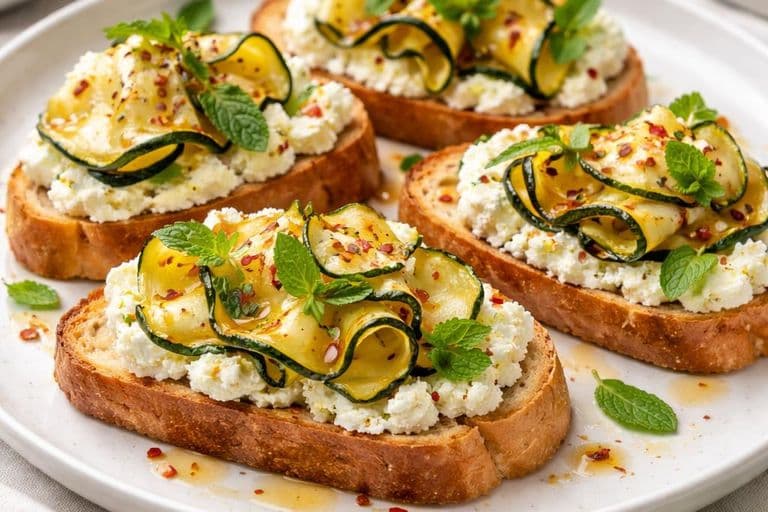
Courgette, lemon ricotta and chilli-honey crostini

Halloumi, courgette and red pepper skewers with chilli‑honey glaze