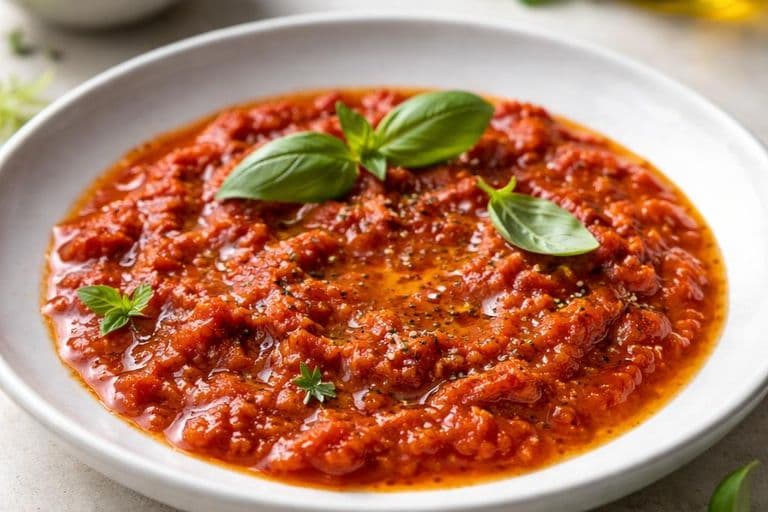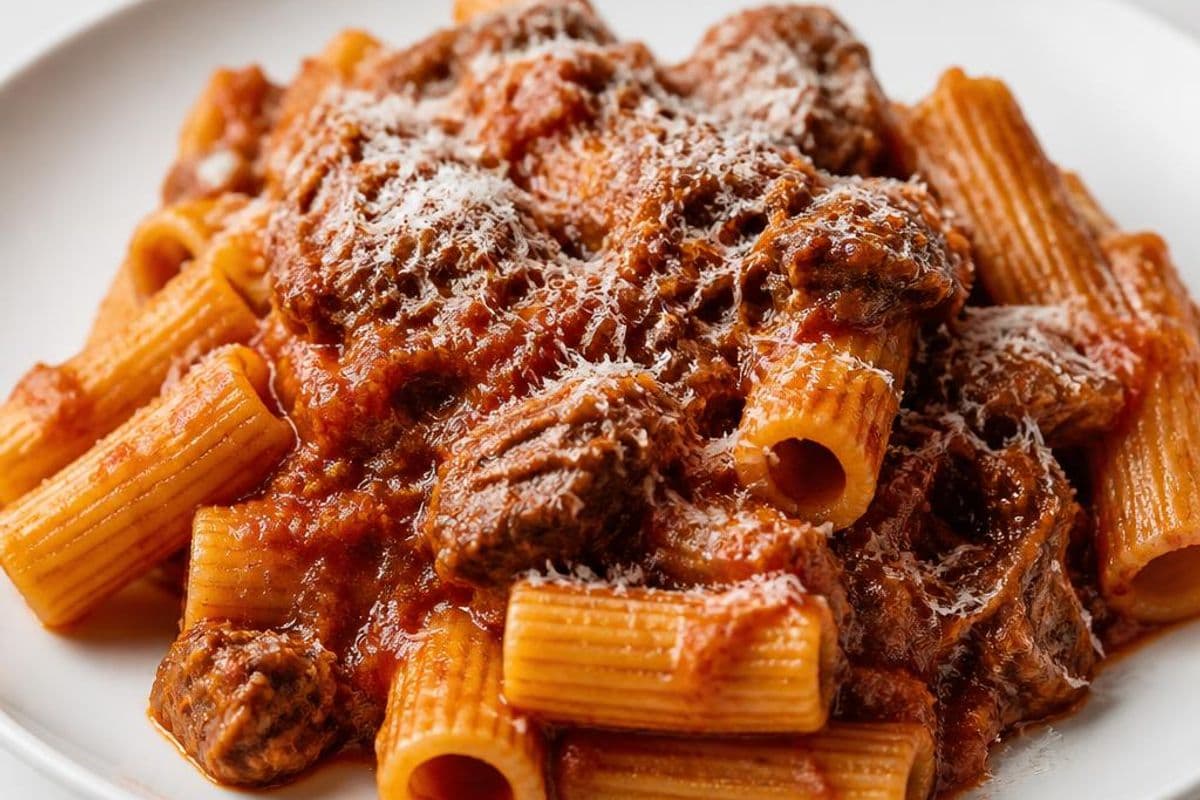
Ragù alla Napoletana
A slow-simmered Neapolitan meat ragu — big chunks of beef and pork braised until fall-apart tender in a glossy tomato sauce. Serve tossed with rigatoni and a shower of Pecorino for proper Sunday-feast vibes.
This is proper Ragù alla Napoletana — not the rushed mince-and-tomato you see in weeknight shortcuts, but a slow, comforting braise where big cuts of meat melt into a tomato hug. It’s exactly the sort of thing worth planning for: patience rewarded with rich, soulful sauce.
Make it for Sunday lunch, a family gathering, or any time you want pasta that feels like a warm hug. The magic is low and slow, a splash of wine for backbone and a late addition of milk to mellow the tomatoes into something almost velvet.
Ingredients
- 30 ml extra-virgin olive oil
- 1 large yellow onion — finely diced (about 150 g)
- 1 medium carrot — finely diced
- 2 stalks celery stalks — finely diced
- 3 cloves garlic — crushed and lightly smashed
- 600 g beef chuck — cut into large 3–4 cm chunks
- 400 g pork shoulder — cut into large 3–4 cm chunks
- 800 g canned San Marzano tomatoes — whole peeled, crushed by hand or with a spoon
- 15 ml tomato paste — optional, for colour and body
- 150 ml dry red wine — Chianti or similar
- 150 ml whole milk — added near the end to mellow acidity
- 2 bay leaves
- 8 leaves fresh basil — torn, for finishing
- sea salt — to taste; start with 1½ tsp during cooking and adjust at the end
- freshly ground black pepper — to taste
- 500 g rigatoni (or ziti) — dry, for serving
- 60 g Pecorino Romano — finely grated, for serving
- cold water — as needed for adjusting sauce consistency and cooking pasta
Equipment
- large heavy-bottomed Dutch oven or heavy casserole
- wooden spoon
- spoon or skimmer for skimming fat
- large pot for pasta
Instructions
Prepare the veg and meat: finely dice the onion, carrot and celery; crush the tomatoes by hand (or pulse briefly in a food processor); pat the beef and pork dry and cut into 3–4 cm chunks. Season the meat lightly with salt and pepper.
Heat a large heavy-bottomed pot or Dutch oven over medium–high heat. Add 1 tbsp olive oil. When shimmering, brown the meat in batches so pieces have space — don’t overcrowd the pan. Brown each batch roughly 5–7 minutes until well-coloured on all sides; transfer browned pieces to a plate.
Add the remaining 1 tbsp olive oil to the pot. Reduce heat to medium. Add the diced onion, carrot and celery and a pinch of salt. Sweat gently until soft and translucent, about 8–10 minutes; do not let them brown.
Return the browned meat to the pot. Stir to combine with the soffritto. Add the crushed tomatoes, tomato paste (if using) and bay leaves. Pour in the red wine, scraping up any brown bits from the bottom. Bring to a gentle simmer.
Adjust heat to the lowest possible simmer (sauce should barely bubble). Partially cover the pot with the lid tilted to let steam escape. Cook for 2 hours 30 minutes to 3 hours, undisturbed for long stretches but stir every 20–30 minutes and skim any excessive fat or foam from the surface.
About 30 minutes before the end of cooking, pour in the milk and stir through. Continue to simmer gently until meat is tender and the sauce is glossy and reduced to a rich, clingy consistency.
Taste and season with salt and pepper. Remove the bay leaves. If the sauce is too thin, increase heat briefly to reduce but watch carefully. Remove the meat pieces to a board and, if you like, shred with two forks or slice into large pieces; return some shredded meat to the sauce.
Bring a large pot of heavily salted water to the boil and cook the rigatoni to package instructions until just al dente. Reserve 250 ml (about 1 cup) of the pasta cooking water before draining.
Add the drained pasta straight to the simmering ragù along with a splash of reserved pasta water. Toss vigorously over low heat for 1–2 minutes so the sauce coats the pasta; add more pasta water if needed to loosen.
Stir in torn basil leaves and a little grated Pecorino. Plate with extra Pecorino on the side and a few pieces of the braised meat.
Tips
- Brown the meat in batches and don’t rush it — well-browned meat equals depth of flavour. If you’ve got a thermomètre, the pan should be hot enough that pieces sing when they hit it.
- Keep the simmer gentle. A vigorous boil makes the meat tough and the sauce grainy; aim for tiny, lazy bubbles.
- Reserve at least 250 ml of pasta water; its starch is the secret emulsifier that helps the sauce cling to the pasta.
- Make-ahead: this ragu only improves after a day in the fridge (fat solidifies on top — skim it off before reheating). Freeze in portions for up to 3 months.
- If the sauce tastes flat at the end, a small squeeze of lemon or a splash of extra-virgin olive oil brightens it without making it ‘citrus’.
Substitutions
beef chuck → lamb shoulder, same quantity
Noticeably differentpork shoulder → pancetta, 120 g diced (reduce added salt)
Stays closerigatoni → ziti or penne rigate, same quantity
Stays close
Nutrition
Per serving · estimated
- 1046
- Calories
- 60 g
- Protein
- 63 g
- Carbs
- 40 g
- Fat
- 4 g
- Fibre
- 2 g
- Sugar
- 800 mg
- Sodium
FAQ
Can I make this ahead of time?
Yes — it improves after a day in the fridge. Reheat gently on the stove; add a splash of water if it’s too thick. You can also freeze portions for up to 3 months.
Why add milk to a tomato ragu?
Milk softens the tomato’s acidity and helps break down collagen in the meat, giving a smoother, silkier sauce and more tender meat. Add it near the end so it doesn’t curdle.
Can I use minced meat instead of big chunks?
You can, but that becomes a different style (ragù alla bolognese). The Neapolitan method uses large braising pieces for a meatier finish and a different texture.
How do I know when the meat is done?
It should be fork-tender and easily pull apart. If it still feels chewy, continue to simmer gently and check every 20–30 minutes.
Community Photos
No photos yet
Be the first to share your creation!