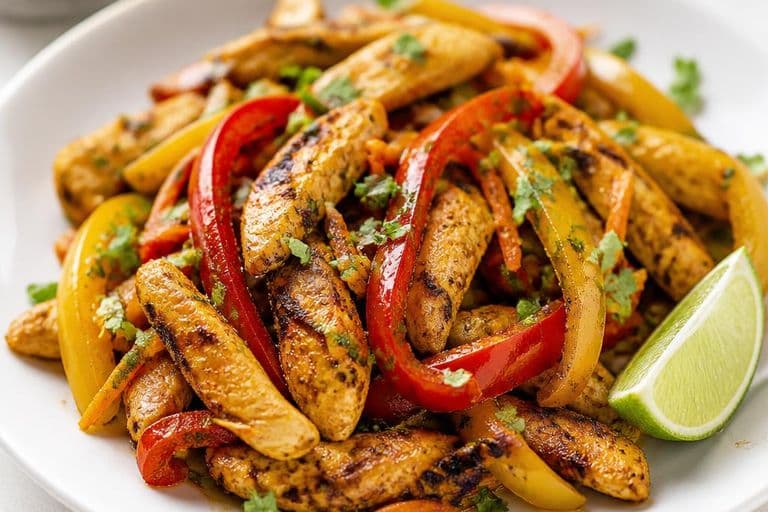
Pork tamales with red chilli adobo
Soft corn tamales filled with slow-braised smoky pork in a red chilli adobo, steamed in corn husks until tender and fragrant.
Tamales are worth the fuss: a tender corn dough wrapped in a husk with melting, spicy pork inside. This version leans on a homemade red chilli adobo and slow-braised pork shoulder for depth of flavour.
They’re brilliant for a weekend cook-up — make a big batch, steam some and freeze the rest. Serve with bright lime and chopped fresh coriander to cut through the richness.
Ingredients
- 30 dried corn husks — about 30 small/medium husks
- 500 g masa harina
- 10 ml baking powder
- 10 ml fine salt
- 200 g lard
- 600 ml pork stock — use warm stock when mixing masa
- 1.2 kg pork shoulder — cut into large chunks
- 3 dried ancho chillies
- 2 dried guajillo chillies
- 4 garlic cloves — peeled
- 1 brown onion — peeled and halved
- 5 ml ground cumin
- 5 ml dried oregano
- 5 ml smoked paprika
- 15 ml soft light brown sugar
- 30 ml apple cider vinegar
- 30 ml vegetable oil
- 5 ml freshly ground black pepper
- 1 1/2 l hot water — for soaking husks and rehydrating chillies
- 15 g fresh coriander — to garnish
- 2 limes — cut into wedges to serve
Equipment
- large steamer or large stockpot with steamer basket
- blender or food processor
- large heavy-based casserole or slow cooker
- electric hand mixer or stand mixer (for beating masa)
Instructions
Place the dried corn husks in a large heatproof bowl and pour over just-boiled hot water to cover. Weigh down with a plate so they stay submerged and leave to soak for 45 minutes.
Meanwhile, remove stems and seeds from the ancho and guajillo chillies. Break into pieces and place in a bowl; pour over 200 ml just-boiled hot water, cover and leave 20 minutes to rehydrate.
Drain most of the chilli soaking liquor into a blender, add the rehydrated chillies, garlic cloves, half the brown onion, apple cider vinegar, soft light brown sugar, ground cumin, dried oregano, smoked paprika and 150 ml pork stock. Blend to a smooth red adobo sauce, then taste and season with fine salt and freshly ground black pepper.
Heat the vegetable oil in a large heavy-based casserole over a medium hob. Brown the pork shoulder pieces all over, working in batches so they colour nicely, about 8–10 minutes total. Return all the pork to the pot, pour in the adobo sauce and the remaining pork stock so the meat is nearly covered. Bring to a simmer, cover and braise gently for 2 hours until the pork is very tender.
Remove the pork from the pot and shred with two forks; return the shredded meat to the pan to coat in the sauce and keep warm while you make the masa.
In a large bowl, combine the masa harina, baking powder and fine salt. In a separate bowl beat the lard until light and slightly fluffy. Add the lard to the masa and begin adding the warm strained braising liquid (top up with hot water if needed) a little at a time, mixing to a soft, spreadable dough. Beat the masa for a minute or two to incorporate air, then cover and leave to rest for 30 minutes.
Drain the soaked corn husks and pat them dry with kitchen paper. Separate into a workable stack and trim any very stiff edges or the very thick stem ends so they fold easily.
Lay a husk shiny side down. Spread about 2–3 tablespoons of masa across the middle (adjust quantity to make roughly 30 tamales), leaving a 2 cm margin at the top and bottom. Add a tablespoon or two of shredded pork in the centre, fold the sides of the husk over the filling, then fold up the base. Repeat until all masa and filling are used.
Stand the tamales upright in a large steamer or a large stockpot fitted with a steamer basket, open end up. Cover the top with any leftover husks and a clean damp tea towel to trap steam. Steam gently over simmering water for 90 minutes.
Switch off the heat and leave the tamales to rest, still covered, for 10 minutes before unwrapping.
Open a tamal to test: the masa should pull cleanly from the husk and be set. Serve warm, garnished with chopped fresh coriander and lime wedges.
Tips
- If you can, make the pork a day ahead — the meat firms and the flavours deepen, and assembly is faster.
- Beat the lard into the masa well — that whipped fat is what gives tamales a light, tender texture.
- Keep unused husks and assembled tamales covered with a damp cloth while you work so nothing dries out and splits.
- To freeze: steam tamales fully, cool, then wrap individually in clingfilm and freeze for up to 3 months. Reheat from frozen by steaming for 25–30 minutes.
- If your masa feels heavy or dense after steaming, it either needed more whipping when mixing, or the dough was too wet or too dry — adjust with small amounts of stock or masa harina next time.
Substitutions
lard → vegetable shortening, same weight
Stays closepork shoulder → chicken thighs, 1.2 kg, shredded
Noticeably differentdried ancho chillies → 2 tablespoons tinned chipotle in adobo (use less; reduce vinegar slightly)
Noticeably differentmasa harina → fresh prepared masa dough (masa fresca), equivalent volume
Stays close
Nutrition
Per serving · estimated
- 880
- Calories
- 36 g
- Protein
- 49 g
- Carbs
- 60 g
- Fat
- 4 g
- Fibre
- 4 g
- Sugar
- 900 mg
- Sodium
FAQ
How do I know when a tamal is cooked?
The masa should pull cleanly away from the husk and feel set and slightly springy. If it sticks or seems doughy, steam another 10–15 minutes and test again.
Can I make tamales ahead and freeze them?
Yes — steam them fully, cool, wrap individually and freeze for up to 3 months. Reheat by steaming from frozen for 25–35 minutes.
Can I use butter instead of lard?
Butter will add flavour but contains water, which can change the texture; use vegetable shortening for a closer result, or use clarified butter sparingly.
Why did my tamales turn out dry or heavy?
Common causes are under-whipped lard in the masa, too much masa on each husk, or over-steaming. Check masa moisture next time and beat to incorporate air.
Community Photos
No photos yet
Be the first to share your creation!