Oven Tandoori Chicken (Authentic-style)
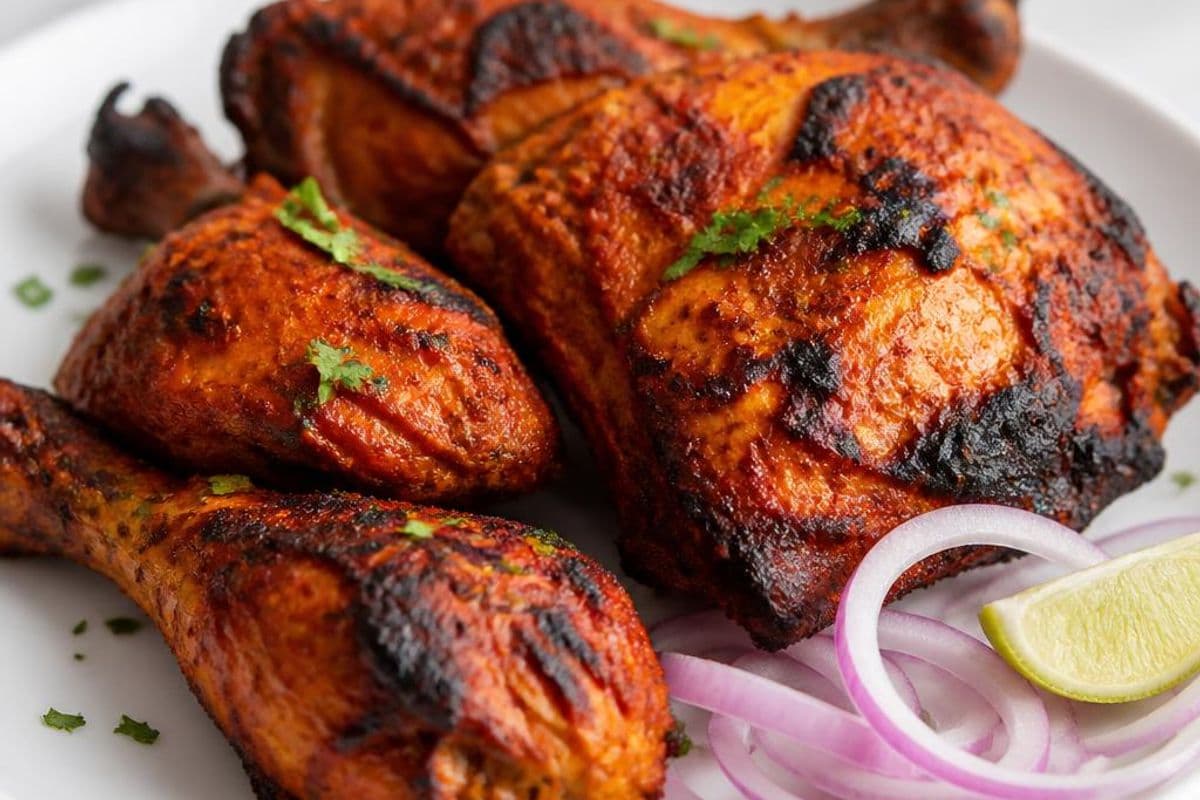
Juicy, charred bone-in chicken in a spiced yoghurt marinade—bright, smoky and perfect for a weeknight roast or a weekend dinner party. Made for a home oven but with all the flavours of a tandoor.
Tandoori chicken is the show-off of Indian home cooking: loudly spiced, beautifully red (or gloriously natural if you skip the dye), and perfect when you want big flavour with minimal fuss. It was invented in a clay tandoor, but your oven will do the job just fine if you follow the tricks.
This version uses bone-in thighs for maximum juiciness and a proper 'hung' yoghurt marinade so the spices cling and the chicken gets that desirable roast crust. Make it for dinner guests, a weekend feast or any time you want smoky, tangy chicken without a Michelin kitchen.
Ingredients
- 1.2 kg chicken thighs (bone-in, skin-on)
- 250 g natural yoghurt (full-fat) — strained (see step)
- 30 ml lemon juice
- 30 ml garlic paste
- 30 ml ginger paste
- 30 ml Kashmiri chilli powder — for colour and mild heat; adjust to taste
- 15 ml paprika — smoked paprika if you like smokiness
- 5 ml ground coriander
- 5 ml ground cumin
- 5 ml turmeric
- 5 ml garam masala
- 5 ml kasuri methi (dried fenugreek leaves) — crushed between the palms
- 10 ml salt
- 5 ml black pepper
- 0 ml baking powder — helps a light crust (optional)
- 30 ml vegetable oil (or mustard oil for authenticity)
- 30 ml fresh coriander (cilantro), chopped — for garnish
- lemon wedges — to serve
- red food colouring — pinch, optional (purely aesthetic)
Equipment
- fine sieve or muslin (for hanging yoghurt)
- large mixing bowl
- wire rack and baking tray
- meat thermometer
- grill pan or broiler (for charring)
Instructions
Make 'hung' yoghurt: drape the yoghurt in a fine sieve or muslin over a bowl and let it drain for 20–30 minutes until thick and creamy. This concentrate gives the marinade cling and prevents it becoming watery in the oven.
Prepare the chicken: pat the thighs dry, then make 3–4 deep diagonal cuts in each piece (cut to but not through the bone). Scoring lets the marinade penetrate to the bone for more flavour.
In a large bowl combine the hung yoghurt, lemon juice, garlic paste, ginger paste, Kashmiri chilli powder, paprika, ground coriander, ground cumin, turmeric, garam masala, crushed kasuri methi, salt, black pepper, baking powder and oil. Add a tiny pinch of red food colouring if using and whisk to a smooth paste.
Toss the chicken in the marinade, rubbing it well into the cuts and under the skin where possible. Cover the bowl, then refrigerate. Minimum marinate 4 hours; best 8–24 hours for deep flavour.
Remove the chicken from the fridge 30 minutes before cooking to take the chill off—this helps it cook evenly.
Preheat the oven to 220°C (fan 200°C). Set a wire rack on a baking tray and lightly oil the rack; the rack lets hot air circulate and the tray catches drips.
Arrange the marinated thighs on the oiled rack, skin-side up, leaving space between pieces for air circulation.
Roast in the preheated oven for 22 minutes. This cooks the chicken through and develops colour.
Finish under the grill (broiler) for 3–5 minutes to get charred edges—watch constantly so it doesn't burn. Alternatively, briefly sear on a very hot grill pan for char marks.
Remove from the oven and rest the chicken 5 minutes. Scatter chopped coriander and serve with lemon wedges and a simple cooling raita or salad if you like.
Tips
- Always strain the yoghurt—thin yoghurt gives a runny marinade that won't cling or char properly.
- Score (make cuts) in the thighs so the marinade reaches the bone; it dramatically improves flavour and juiciness.
- If you want extra smokiness, place a small piece of foil with a pinch of smoked tea leaves or charcoal in the tray, heat until smoking, then quickly cover the tray for 30–60 seconds (dhungar). Do this with care and ventilation.
- Make ahead: marinate 24 hours ahead and cook the same day. Cooked chicken keeps 3 days in the fridge; reheat gently in a low oven to avoid drying.
- Use a meat thermometer (75°C near the bone) to avoid overcooking—visual cues alone can be misleading.
Substitutions
natural yoghurt (full-fat) → Greek yoghurt or coconut yoghurt (for dairy-free) — use full-fat Greek for closest texture, coconut yoghurt will change flavour
Noticeably differentKashmiri chilli powder → regular chilli powder + extra paprika for colour (use less chilli powder if you want milder heat)
Stays closebone-in chicken thighs → skinless chicken breasts or boneless thighs — reduce cooking time (breasts will dry faster)
Noticeably differentvegetable oil → mustard oil (authentic flavour) or ghee — mustard oil adds authentic pungency, ghee increases richness
Stays close
Nutrition
Per serving · estimated
- 420
- Calories
- 48 g
- Protein
- 6 g
- Carbs
- 20 g
- Fat
- 2 g
- Fibre
- 4 g
- Sugar
- 700 mg
- Sodium
FAQ
Can I use chicken breasts instead of thighs?
Yes, but breasts cook faster and dry out more easily. Reduce oven time and remove when internal temperature reaches 74–75°C. Boneless thighs are the closest substitute for juiciness.
Why do recipes use red food colouring?
Traditional tandoori often has a bright red hue from Kashmiri chillies. Colouring is purely aesthetic—Kashmiri chilli powder and paprika give a natural red without artificial dye.
How do I get a smoky tandoor flavour at home?
Finish with the ‘dhungar’ method: heat a small piece of charcoal until glowing, place it in a metal cup on the tray, add a drop of oil to smoke, cover quickly for 30–60 seconds to trap the smoke—ventilate the kitchen. Or use smoked paprika/charred grill pan for a simpler effect.
Can I grill the chicken outdoors?
Absolutely. Cook over medium-high indirect heat first to cook through, then finish over direct flames for charring—watch carefully to avoid burning the spices.
Community Photos
No photos yet
Be the first to share your creation!