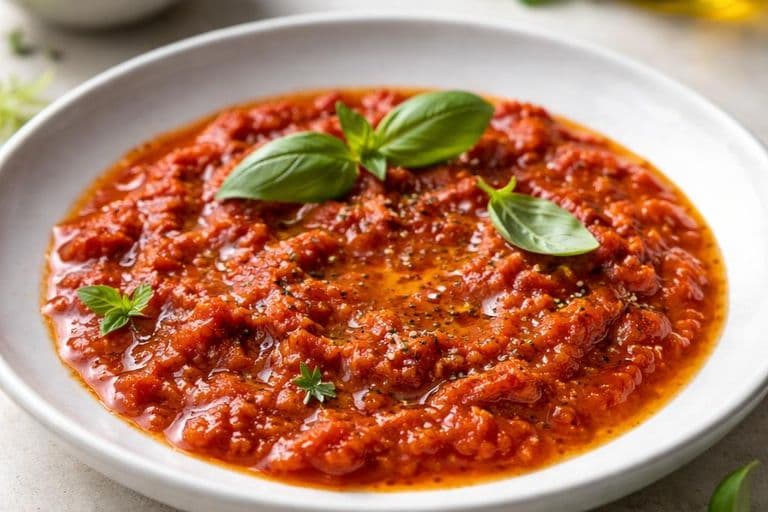
Sicilian Caponata (Sweet‑Sour Aubergine Antipasto)
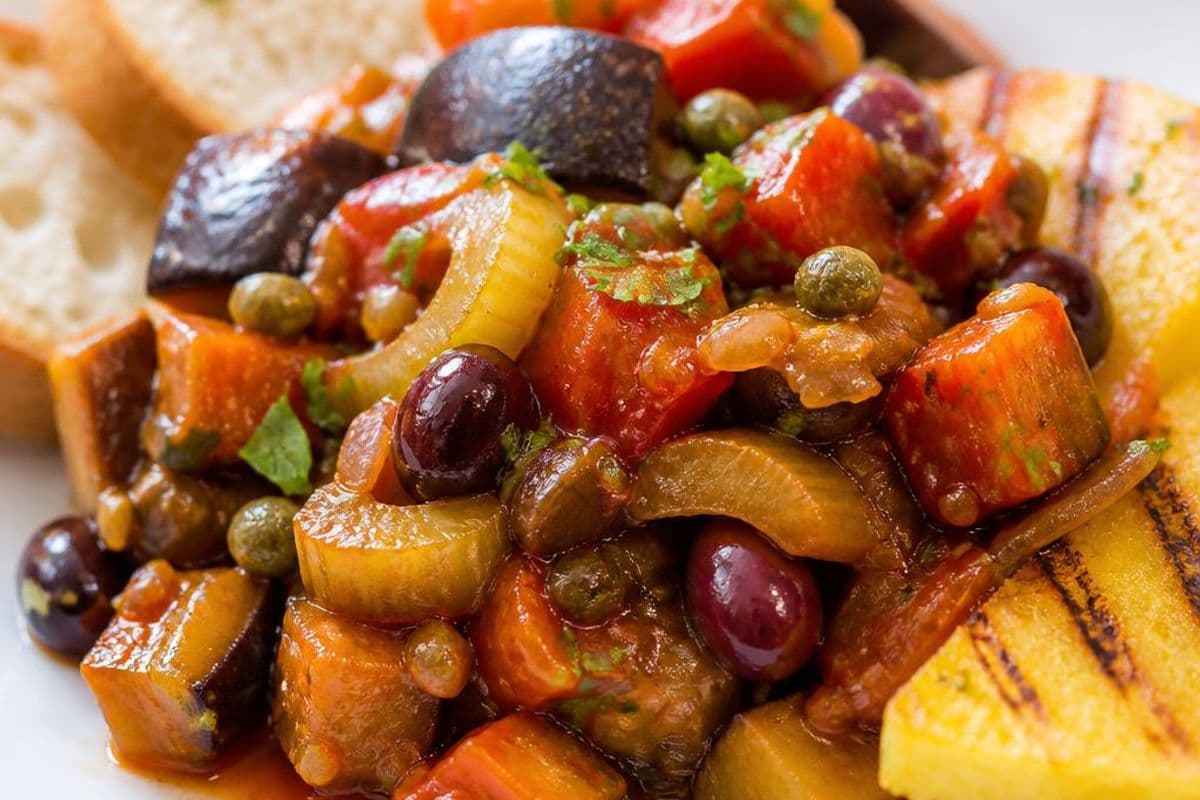
A glossy, sweet-and-sour Sicilian caponata: golden cubes of aubergine folded with celery, olives and capers in a bright tomato-vinegar glaze. Serve warm or cold with crusty bread or griddled polenta.
Caponata is Sicily in a bowl: sun‑kissed aubergine meeting a cheeky tang of vinegar and the salty pop of capers and olives. It’s less recipe and more attitude — rustic, saucy and utterly addictive.
Make it as an elegant starter, a picnic-friendly relish or a weeknight hero with grilled polenta. The real magic is the resting time — flavours deepen overnight, so it’s a perfect make‑ahead dish for fuss‑free entertaining.
This version keeps things traditional but skips nuts so it’s friendlier for most plates — still bold, still glossy, still very Sicilian.
Ingredients
- 800 g aubergines — about 2 medium, cut into 2cm cubes
- coarse salt — about 1 tbsp (for salting the aubergine)
- 80 ml extra‑virgin olive oil — total: ~60 ml for frying, 20 ml for the sauce/finish
- olive oil (for cooking, alternative) — use a neutral oil if you prefer a lighter olive flavour
- 1 yellow onion — medium (about 150 g), finely chopped
- 3 stalks celery — trimmed and sliced 5 mm thick (about 120 g)
- 15 ml tomato paste — 15 g
- 400 g canned plum tomatoes — crushed by hand or roughly chopped
- 25 g caster sugar — about 2 tbsp
- 60 ml red wine vinegar — about 4 tbsp
- 80 g green olives — pitted and halved; Castelvetrano if you can get them
- 30 g capers — about 2 tbsp, rinsed if salted
- 15 g fresh flat‑leaf parsley — roughly chopped (plus extra for garnish)
- 10 g fresh basil — optional, torn
- 5 ml fine sea salt — for seasoning the sauce; adjust to taste
- 5 ml black pepper — freshly ground, approx
- 5 ml lemon zest — optional, for brightness
Equipment
- large heavy‑based frying pan or skillet
- colander
- kitchen towels or paper towels
- slotted spoon
Instructions
Prepare the aubergine: trim and cut into roughly 2 cm cubes and place in a colander. Sprinkle the coarse salt evenly over the cubes and toss so salt contacts all pieces. Leave to sweat for 25 minutes to draw out excess moisture.
Rinse the aubergine thoroughly under cold running water to remove excess salt, then transfer to clean kitchen towels or paper towels and pat completely dry. Any surface moisture will cause splatter when frying.
Heat a large, heavy‑based frying pan or skillet over medium‑high. Add about 60 ml of the olive oil. Fry the aubergine in batches so the pan isn't crowded, turning occasionally, until deep golden and tender — about 4–5 minutes per batch. Transfer fried aubergine to a plate lined with kitchen paper to drain.
Reduce heat to medium, add the remaining olive oil (about 20 ml) to the same pan. Add the chopped onion and sliced celery and sauté until soft and translucent, about 6–8 minutes.
Stir in the tomato paste and cook 1 minute to sweeten, then add the canned tomatoes and break them up with the back of a spoon. Bring to a gentle simmer.
Stir in the caster sugar, then pour in the red wine vinegar. Let the mixture bubble and reduce until it becomes glossy and slightly syrupy, about 8–10 minutes. Taste and aim for a clear sweet‑and‑sour balance.
Return the fried aubergine to the pan with the olives and capers. Gently fold everything together and simmer for 4–5 minutes so the aubergine soaks up the sauce.
Stir through the chopped parsley, torn basil (if using), lemon zest (optional), and season with the fine sea salt and black pepper. Give it one last gentle stir and remove from the heat.
Cool the caponata to room temperature, then cover and chill for at least 2 hours (ideally overnight) to let the flavours marry. Bring back to room temp before serving; caponata can be eaten cold, at room temperature or gently warmed.
To serve: transfer to a shallow bowl, drizzle a little extra virgin olive oil and scatter extra parsley. Serve with crusty bread, toasted sourdough, grilled polenta or as part of an antipasti spread.
Storage: keep in an airtight container in the fridge for up to 5 days. Freezing is possible (up to 3 months) but aubergine texture will become softer on thawing.
Tips
- Salt the aubergine and pat dry — that step hugely reduces oil absorption and gives you crisp, golden cubes rather than soggy lumps.
- Fry aubergine in batches and keep the pan hot; crowded aubergine steams, it doesn’t brown.
- Balance the sweet and sour by tasting after the sugar + vinegar step — add a splash more vinegar if it’s too sweet or a pinch more sugar if it’s too sharp.
- Make it a day ahead: caponata improves overnight as the flavours marry; bring to room temperature before serving.
- If you want to cut oil, roast the aubergine at 220°C/425°F for 25–30 minutes instead of frying (stays close but texture is slightly different).
Substitutions
frying aubergine in olive oil → roast aubergine cubes at 220°C/425°F for 25–30 minutes until golden (use 2 tbsp oil to toss)
Stays closered wine vinegar → balsamic vinegar (use a little less, start with 2 tbsp)
Noticeably differentgreen olives → black olives (e.g. Kalamata), roughly chopped
Stays closecaster sugar → light brown sugar or honey (use slightly less honey)
Stays close
Nutrition
Per serving · estimated
- 230
- Calories
- 3 g
- Protein
- 15 g
- Carbs
- 15 g
- Fat
- 4 g
- Fibre
- 6 g
- Sugar
- 650 mg
- Sodium
FAQ
Can I make caponata without frying?
Yes — roast aubergine cubes on a hot tray until caramelised. The flavour stays close, though frying gives a silkier, richer mouthfeel.
How long does caponata keep?
Stored in an airtight container in the fridge it will keep 4–5 days. Freezing is possible but expect a softer texture after thawing.
Is caponata served hot or cold?
Either. It’s traditionally served at room temperature or slightly chilled so the flavours shine. Warm it gently if you prefer.
Can I add other vegetables?
You can — diced bell pepper or a handful of raisins are traditional in some versions. Each addition changes the character slightly but keeps things tasty.
Community Photos
No photos yet
Be the first to share your creation!