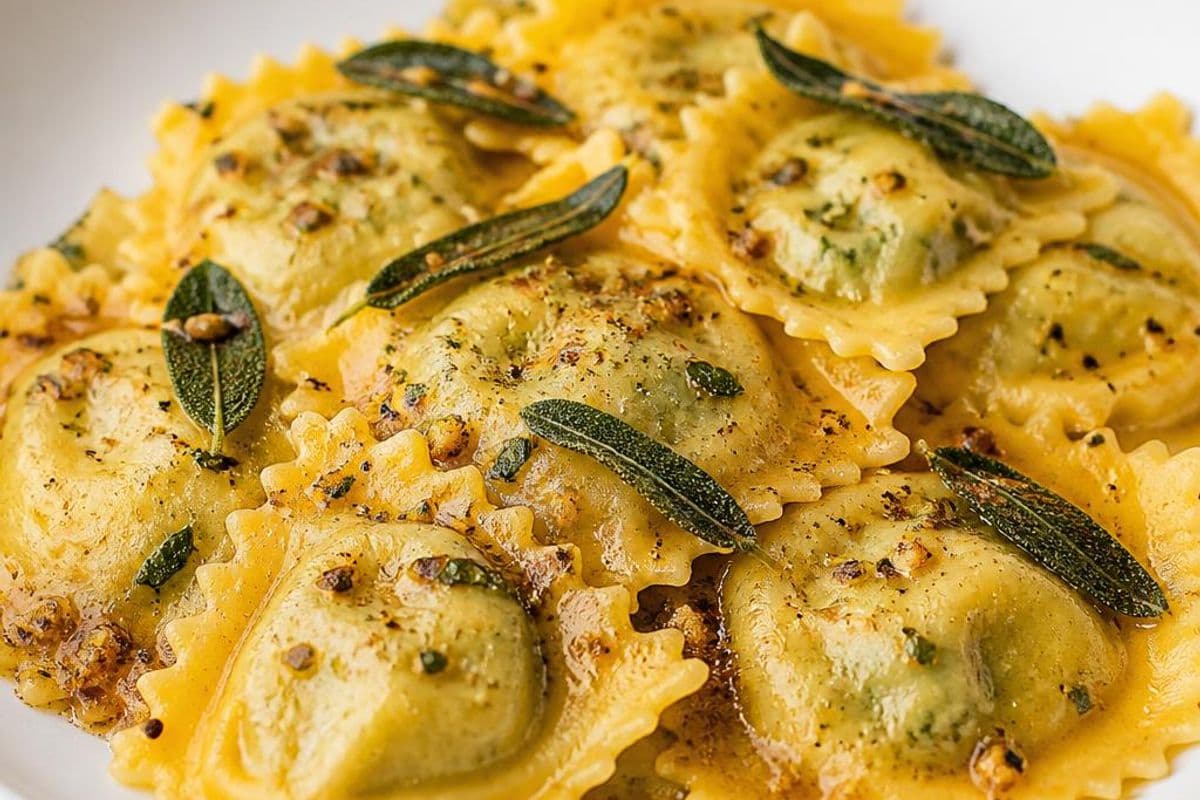
Ricotta & Spinach Ravioli with Brown Butter and Sage
Silky fresh ravioli filled with creamy ricotta and spinach, tossed in a nutty brown butter and crisp sage sauce. Comfortingly simple but endlessly elegant — perfect for weekend cooking or impressing guests without breaking a sweat.
Fresh ravioli, brown butter and sage — the classic Italian trio that looks restaurant-level but feels delightfully achievable at home. The butter’s nutty warmth and the perfume of fried sage turn modest ricotta-and-spinach parcels into something quietly celebratory.
Make it for a cosy supper, a date night, or when you want to serve something that says ‘I bothered’ without needing a Michelin brigade. If you’re short on time, the recipe includes sensible shortcuts (store-bought ravioli) so you can still get the silky sauce and crisp sage fix.
Ingredients
- 200 g 00 flour or plain (all-purpose) flour
- 0 g fine sea salt (for dough) — about 1/4 tsp
- 2 large eggs
- 1 large egg yolk — adds richness to pasta
- 400 g ricotta (whole-milk recommended) — drain excess whey if watery
- 200 g fresh spinach leaves — will wilt to ≈150g cooked; or use 150g frozen, thawed and squeezed
- 50 g Parmesan, finely grated
- 5 ml freshly grated nutmeg
- salt (for filling and pasta water) — to taste; about 1 tbsp for 4–5L water
- freshly ground black pepper — to taste
- 100 g unsalted butter (for sauce)
- 12 leaves fresh sage leaves — small to medium leaves
- 15 ml extra-virgin olive oil
- 1/2 lemon (optional) — zest or a few drops of juice to brighten
- 30 g toasted walnut pieces (optional) — for crunch
- 500 g store-bought fresh or frozen ravioli (optional shortcut) — use in place of making the dough and shaping ravioli
Equipment
- pasta machine (optional but speeds rolling)
- ravioli cutter or sharp knife (or fork)
- rolling pin (if no pasta machine)
- large sauté pan for sauce
- slotted spoon
Instructions
Make the pasta dough: mound the flour on a clean surface, sprinkle the 1/4 tsp salt, make a well in the centre and crack in the 2 whole eggs + 1 yolk. Using a fork, gradually beat eggs and incorporate flour from the inside walls until a shaggy dough forms, then knead by hand until smooth and elastic.
Wrap the dough in cling film and rest at room temperature for 30 minutes. This relaxes the gluten and makes rolling much easier.
Prepare the filling while the dough rests: rinse spinach, then blanch in a large pan of boiling water for 30–45 seconds until wilted. Drain in a colander and immediately plunge into ice water to stop cooking. Squeeze out as much liquid as possible (press with hands or a clean towel), then roughly chop.
In a bowl, combine drained ricotta, chopped spinach, grated Parmesan, nutmeg, a generous pinch of salt and several grinds of black pepper. Taste — the filling should be slightly under-seasoned because the pasta and sauce will add salt. Stir until smooth and refrigerate until needed.
Roll the pasta dough: cut dough into 2 pieces. Keep one covered. Flatten one piece and run through a pasta machine from the widest setting 2–3 times, folding once if needed, then progressively roll to thinner settings until you reach about setting 5–6 (or until sheet is about 1.5–2 mm thick). Alternatively, roll with a floured rolling pin to even thin sheets.
Form ravioli: place teaspoon-sized mounds (about 12–14 g each) of filling in rows spaced 3–4 cm apart on one pasta sheet. Lightly brush the edges and between mounds with water. Lay the second sheet on top, gently press down around each mound to seal and push out air. Cut between to make squares; press edges firmly with a fork or ravioli cutter.
Set formed ravioli on a lightly floured tray, not touching. If making ahead, dust with flour and cover with a clean tea towel or cling film (not tightly) and refrigerate for up to 4 hours or freeze on a tray for 1 hour before bagging.
Bring a large pot of salted water to a rolling boil (about 4–5 L; 1 tbsp salt). If using store-bought ravioli, skip to step 10 and cook according to packet timing (usually 2–4 minutes fresh, 4–6 frozen).
Cook the fresh ravioli in batches: gently lower ravioli into boiling water and stir once to stop sticking. Fresh ravioli will float and be ready in 3–4 minutes; check one for doneness (tender pasta, hot filling). Use a slotted spoon to lift them out.
While the ravioli cook, make the brown butter sage sauce: heat a large shallow sauté pan over medium heat. Add the butter and let it melt, swirling occasionally. After about 3–5 minutes the milk solids will turn golden-brown and the butter will smell nutty.
Lower the heat to low, add the olive oil (prevents butter from browning too quickly), add the sage leaves and fry for 20–30 seconds until crisp (they’ll darken slightly). If using lemon, add a little zest or a few drops of juice now. Remove the pan from the heat.
Combine: Add the drained ravioli to the pan with the brown butter (if pan large enough) and gently toss for 30–60 seconds so each parcel is coated. Add a couple of tablespoons of the pasta cooking water if the sauce needs loosening.
Plate: divide ravioli between warm plates, spoon over crispy sage leaves and any remaining brown butter, scatter toasted walnuts if using and a little extra grated Parmesan. Finish with a few grinds of black pepper and, if you like, a pinch of flaky sea salt.
Tips
- If your ricotta is watery, drain it in a sieve lined with a paper towel for 15–20 minutes — a drier filling prevents soggy ravioli and improves flavour.
- When browning butter, have everything ready to go: the process is quick and you don’t want the butter to burn while you search for sage.
- Use reserved pasta water (a few tablespoons) to loosen the sauce — the starch helps the butter cling to the ravioli for a glossy finish.
- If you don’t have a pasta machine, roll dough thinly with a rolling pin; work in small sections and keep sheets covered so they don’t dry out.
- Ravioli freeze very well on a tray for 1 hour, then transfer to a bag; cook from frozen and add 1–2 minutes to boiling time.
Substitutions
Fresh homemade ravioli (dough + filling) → 500 g good-quality store-bought fresh or frozen ravioli
Stays closeRicotta & spinach filling → roasted butternut squash and ricotta filling (approx. 400 g cooked squash + 200 g ricotta)
Noticeably differentParmesan → Pecorino Romano (equal weight)
Stays closeWheat flour pasta → gluten-free fresh pasta or store-bought gluten-free ravioli
Noticeably different
Nutrition
Per serving · estimated
- 650
- Calories
- 22 g
- Protein
- 42 g
- Carbs
- 38 g
- Fat
- 3 g
- Fibre
- 4 g
- Sugar
- 700 mg
- Sodium
FAQ
Can I use store-bought ravioli instead of making it?
Yes — use about 500 g good-quality fresh or frozen ravioli. Cook per packet instructions and finish in the brown butter sage sauce as directed.
How do I prevent the ravioli from bursting?
Work quickly when sealing: press out all air pockets, moisten edges to ensure a tight seal, and don’t overstuff. Cook in gently boiling water and avoid vigorous boiling.
Can I make the filling in advance?
Absolutely — the filling keeps covered in the fridge for 24–48 hours. If it dries a little, stir in a teaspoon of milk before assembling.
How should I reheat leftovers?
Reheat gently in a shallow pan with a knob of butter over low heat — add a splash of water to steam through. Avoid microwaving which can make the pasta rubbery.
Community Photos
No photos yet
Be the first to share your creation!