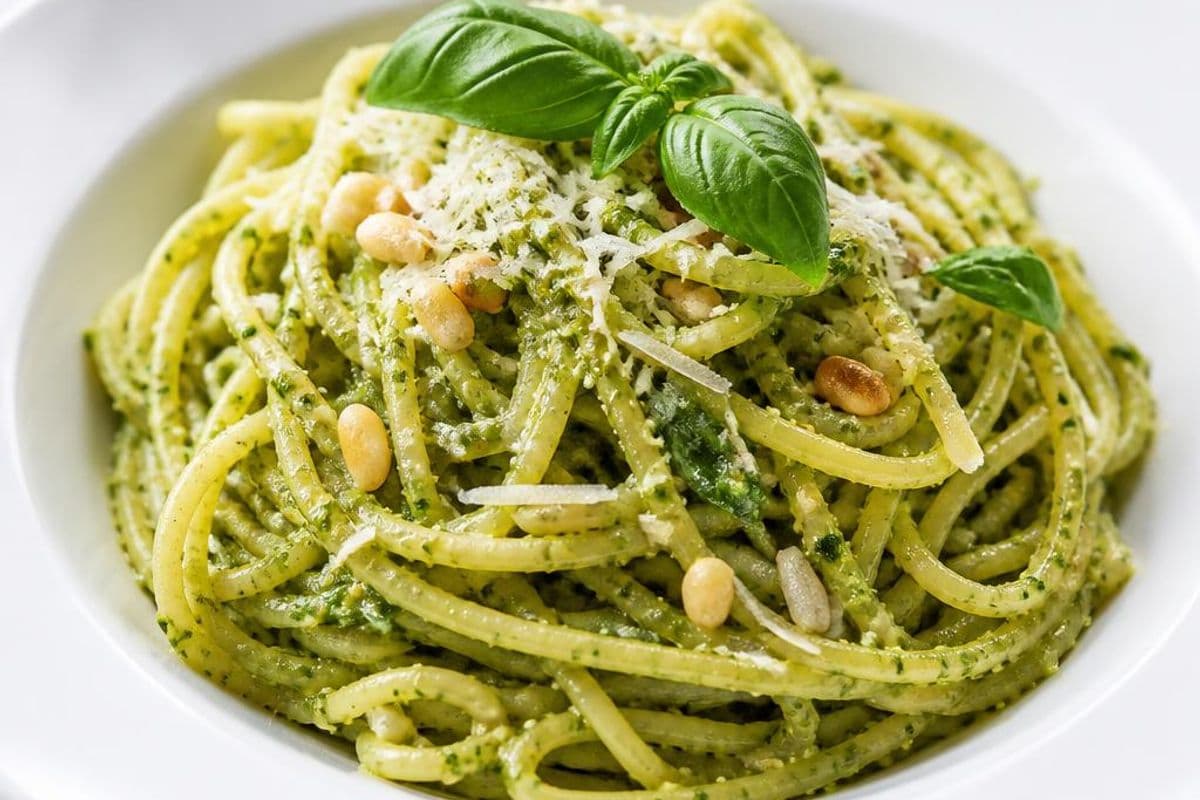
Pesto Genovese Pasta
Classic Ligurian basil pesto tossed through al dente pasta — bright, herbaceous and nuttily cheesy. Quick to make, infinitely tweakable and perfect for a midweek supper or a show-off weekend meal.
This is proper Pesto Genovese — fresh basil, toasted pine nuts, Parmigiano and Pecorino bound with good olive oil. It's the kind of pasta that tastes like a sunny Ligurian garden in one forkful.
Make it when you have a bunch of fragrant basil to use up, for a quick dinner that feels like a treat, or as your star dish for guests who appreciate simple, top-quality ingredients.
The trick is freshness and restraint: don't over-process the basil and use starchy pasta water to marry the sauce to the pasta — that's where the silky magic happens.
Ingredients
- 400 g dried pasta (trofie, trenette, linguine or spaghetti)
- 60 g fresh Genovese basil leaves (packed, stems removed)
- 50 g pine nuts
- 60 g Parmigiano Reggiano, finely grated
- 30 g Pecorino (Sardo or Romano), finely grated
- 2 garlic cloves (medium) — peeled
- 120 ml extra virgin olive oil — divided; plus extra to finish
- sea salt — for pasta water and to taste in pesto
- freshly ground black pepper — to taste
- reserved starchy pasta water — about 150–200 ml reserved when draining
- extra basil leaves and toasted pine nuts — for garnish
Equipment
- food processor (or mortar and pestle)
- large pot
- large sauté pan or mixing bowl
- fine grater (microplane)
- colander
Instructions
Strip basil leaves from stems and put the leaves in a large sieve or salad spinner. Rinse quickly under cold water, then spin or pat very dry on kitchen paper. Any remaining water will dilute and darken the pesto.
Lightly toast the pine nuts in a small dry frying pan over medium heat until aromatic and just golden. Shake or stir constantly — they burn in a heartbeat. Transfer to a plate to cool.
Grate the Parmigiano and Pecorino finely and set aside. Peel the garlic and give it a light smash with the side of a knife.
Make the pesto in a food processor: add the garlic and toasted pine nuts and pulse 4–6 times to chop (not purée). Add the basil leaves in handfuls and pulse gently — you want small shards of leaf, not a paste. Add the cheeses and pulse once to combine.
With the motor running, drizzle in about 100 ml of the olive oil gradually until the pesto comes together into a loose emulsion. Stop, taste and season with a pinch of sea salt and a grind of black pepper. If the pesto feels too stiff, add a little more oil or a spoonful of cold water.
Bring a large pot of water to a rolling boil. Generously salt the water (it should taste of the sea) — use roughly 12 g salt per litre if you have a scale. Add the pasta and cook until just al dente (check packet for guidance).
Before draining, scoop out and reserve about 150–200 ml of the starchy pasta water. Drain the pasta quickly — do not rinse.
Put a large warm sauté pan or mixing bowl off the heat. Add 2–3 tablespoons of the reserved pasta water to the pesto to loosen it (you can add more later). Add the drained hot pasta and toss vigorously with tongs or a wooden spoon so every strand is coated. If the sauce is too thick, add more pasta water a tablespoon at a time. Finish with a tablespoon of olive oil for gloss.
Taste and adjust seasoning — add more cheese for saltiness/umami or a splash more pasta water for silkiness. Transfer to warmed plates.
Serve immediately with an extra shower of grated Parmigiano, a few whole toasted pine nuts, a drizzle of olive oil and a basil sprig.
Tips
- Dry the basil thoroughly — any lingering water will brown the pesto and thin the flavour.
- Toast pine nuts just until pale gold; burnt nuts make the whole sauce bitter. Cool them fully before adding to the processor.
- If you over-processed the pesto, loosen it with reserved pasta water rather than extra oil — it keeps the flavour bright.
- Make ahead: pesto keeps 2–3 days in the fridge if covered with a thin layer of olive oil, or freeze in ice cube trays for up to 3 months.
- For authentic texture, pulse gently rather than blitzing; you want small pieces of basil and nuts, not a green paste.
Substitutions
pine nuts → walnuts (same weight) — nuttier, earthier flavour
Stays closeParmigiano Reggiano → aged vegetarian hard cheese or extra Pecorino (same weight)
Stays closeextra virgin olive oil → light-tasting olive oil or a mix of oil and a little neutral oil (same volume)
Noticeably differentdried wheat pasta → gluten-free pasta (use same weight; cook according to packet)
Stays closecheese (Parmigiano/Pecorino) → for vegan: use 3–4 tbsp nutritional yeast and 30 g toasted cashews; omit cheeses
Noticeably different
Nutrition
Per serving · estimated
- 790
- Calories
- 23 g
- Protein
- 79 g
- Carbs
- 43 g
- Fat
- 4 g
- Fibre
- 3 g
- Sugar
- 600 mg
- Sodium
FAQ
Can I use a blender instead of a food processor?
You can, but pulse carefully and avoid heat build-up. A food processor or mortar and pestle gives better control over texture. If using a blender, add the basil in small batches and scrape down often.
Why did my pesto turn dark/brown?
Over-processing (too fast or too long) and heat from the motor oxidises the basil. Dry leaves, short pulses and cooling the ingredients (toast pine nuts separately) prevent this.
How long will homemade pesto keep?
In the fridge: 2–3 days if covered with a thin layer of olive oil. For longer storage, freeze in portions (ice-cube tray or small tubs) for up to 3 months.
Can I add lemon to the pesto?
Yes — a teaspoon of lemon juice brightens the sauce, but add sparingly to avoid masking the basil.
Community Photos
No photos yet
Be the first to share your creation!