Pasta Puttanesca
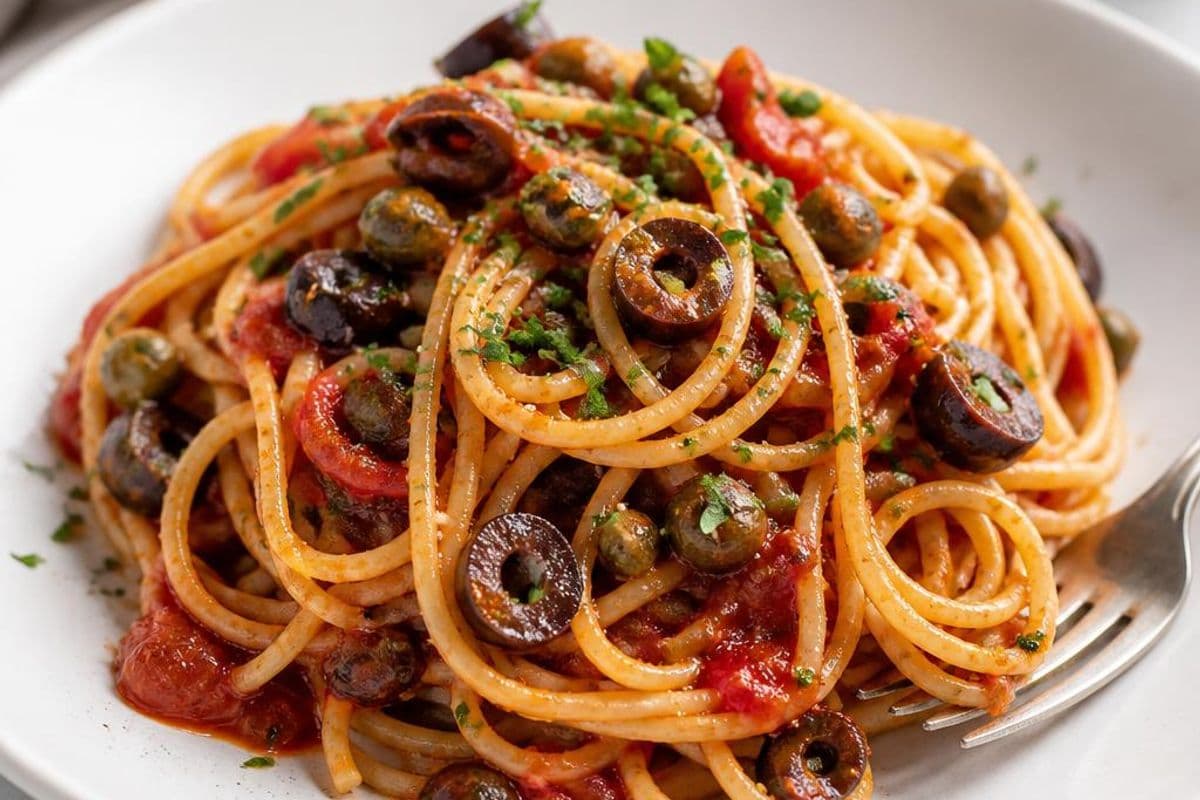
A briny, spicy Neapolitan classic — anchovies, capers and black olives cooked into a bright tomato sauce and tossed with al dente spaghetti. Big flavour, minimal fuss: perfect for weeknights or when you want something boldly savoury with very little faff.
Pasta puttanesca is the kitchen’s equivalent of a punchy one-liner: salty, spicy, and impossible to ignore. It’s a Roman/Neapolitan staple that uses pantry heroes — anchovies, capers and olives — to make a sauce that tastes far more complex than the effort it takes.
Make this when you want a fast, no-faff supper that feels grown-up. It comes together in about 30 minutes, uses one can of tomatoes and a handful of bold ingredients, and sings with simple sides: crusty bread or a green salad.
Ingredients
- 400 g spaghetti (or linguine/bucatini)
- 45 ml extra-virgin olive oil — about 3 tbsp
- 3 garlic cloves, thinly sliced
- 6 anchovy fillets in oil, drained and chopped — about 25–30 g total
- 5 ml red chilli flakes
- 30 g capers, rinsed and drained — about 2 tbsp
- 100 g pitted Kalamata or black olives, halved
- 400 g chopped canned tomatoes (whole or crushed) — 1 standard can
- 15 g tomato paste — 1 tbsp (optional, for extra colour and body)
- 15 g fresh flat-leaf parsley, chopped — about ¼ cup, loosely packed
- 5 ml lemon zest — optional, brightens the sauce
- black pepper — freshly ground, to taste
- sea salt — use sparingly — anchovies, capers and olives are salty
- reserved pasta cooking water — about 150 ml saved from the pot
- freshly grated Parmesan or Pecorino — optional at the table
Equipment
- large pot (for boiling pasta)
- large wide frying pan or skillet
- colander
- tongs
- microplane or zester
Instructions
Bring a large pot of water to a rolling boil. Add a generous pinch of sea salt (it should taste like seawater) and add the spaghetti.
Cook the pasta to 1–2 minutes less than the package instructions for al dente (typically 8–10 minutes). Reserve about 150 ml (⅔ cup) of the starchy cooking water just before you drain, then drain the pasta.
While the pasta cooks, heat the olive oil in a large, wide frying pan over medium heat. Add the sliced garlic and red chilli flakes and gently cook for 30–45 seconds — just until the garlic starts to soften.
Add the chopped anchovies to the pan and use the back of a wooden spoon to mash them into the oil. Cook for 60–90 seconds until they've largely dissolved into the oil and the mixture smells savoury and fragrant.
Stir in the rinsed capers and halved olives and cook for 1 minute to warm through and release flavour.
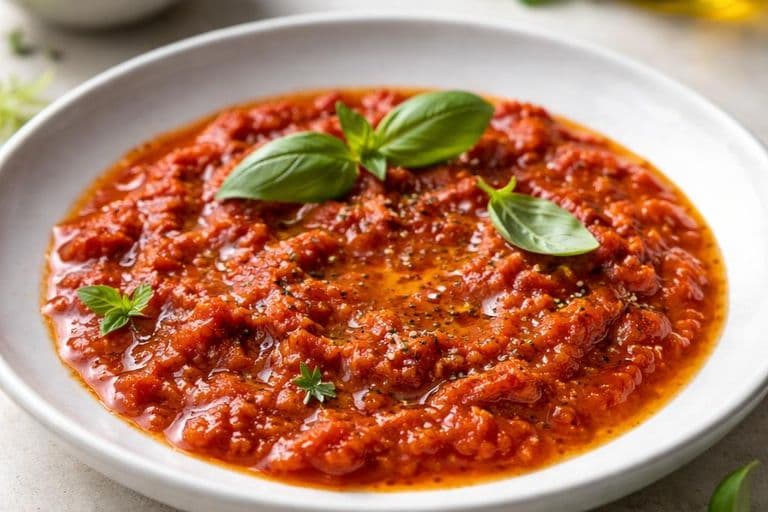
Add the canned tomatoes and tomato paste (if using). Break up whole tomatoes with your spoon. Bring to a gentle simmer, then reduce heat to medium-low and simmer, uncovered, until the sauce thickens slightly, about 8–10 minutes.
Taste the sauce and adjust seasoning very carefully: add black pepper and only a small pinch of salt if needed (anchovies, capers and olives already contribute significant salt).
Add the drained, hot pasta to the sauce along with about 100–150 ml reserved pasta water. Toss vigorously over medium heat for 1–2 minutes so the sauce coats the pasta and the starch in the water helps emulsify it.
Remove from the heat. Stir in chopped parsley and lemon zest (if using). Taste again and adjust pepper or acidity with a tiny squeeze of lemon if needed.
Serve immediately in warm bowls. Offer freshly grated Parmesan or Pecorino at the table for those who want it (traditionalists may scoff — it’s optional). Finish each plate with a small drizzle of extra-virgin olive oil.
Tips
- Do not over-salt — anchovies, capers and olives bring a lot of salt. Always taste the sauce before adding more salt.
- Rinse capers briefly under cold water to remove excess brine; this prevents the sauce from becoming overpoweringly salty.
- Reserve pasta water and use it to loosen the sauce — the starch helps the sauce cling to the pasta for a silky finish.
- If you’re short on time, chop the anchovies finely before heating so they dissolve faster into the oil.
- Make-ahead: the sauce keeps well refrigerated for 2–3 days. Reheat gently and add a splash of pasta water to revive before tossing with freshly cooked pasta.
Substitutions
anchovy fillets → 1½–2 tsp anchovy paste (stays-close)
Stays closeKalamata black olives → green Castelvetrano or Cerignola olives (noticeably-different)
Noticeably differentspaghetti → linguine or bucatini (stays-close)
Stays closecapers → caperberries (remove stem) or extra olives if unavailable (noticeably-different)
Noticeably different
Nutrition
Per serving · estimated
- 540
- Calories
- 16 g
- Protein
- 75 g
- Carbs
- 15 g
- Fat
- 3 g
- Fibre
- 6 g
- Sugar
- 1200 mg
- Sodium
FAQ
Is puttanesca very salty?
It can be — anchovies, capers and olives all add salt. Rinse capers, start with no extra salt in the sauce, and taste before seasoning. Use lower-sodium olives if you’re sensitive.
Can I make this vegan?
Yes. Omit the anchovies and increase capers and olives slightly; add a splash of soy sauce or miso for umami if you like (will be noticeably different but still delicious).
Can I make puttanesca ahead?
The sauce keeps in the fridge for 2–3 days. Reheat gently and add a splash of reserved pasta water when tossing with freshly cooked pasta to refresh the texture.
Do you serve Parmesan with puttanesca?
Traditionally no — many Italians avoid cheese with fish-based sauces. Offer it at the table as optional; it won’t ruin the dish but purists may scoff.
Community Photos
No photos yet
Be the first to share your creation!