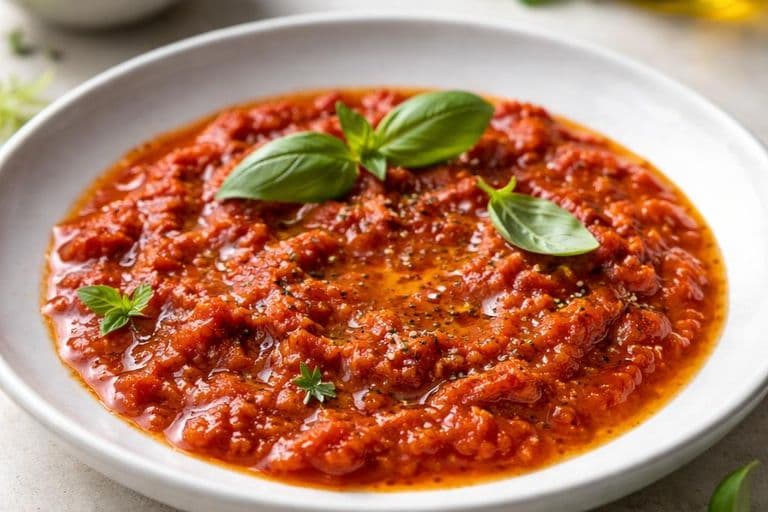
One‑pot tomato and spinach spaghetti
Speedy, saucy one‑pot spaghetti with burst cherry tomatoes, spinach and lemon — ready in 25 minutes.
One‑pot pasta is the weeknight hero: minimal washing up, quick to make and impossibly saucy. This version uses burst cherry tomatoes and hot stock to cook the spaghetti straight in the pan so the pasta soaks up all the flavour as it cooks.
It’s perfect when you want something bright and satisfying in about 25 minutes — lemon and basil lift the dish so it feels special without any faff. Serve as it is or add a simple green salad on the side.
Ingredients
- 400 g dried spaghetti
- 30 ml olive oil
- 1 brown onion — about 150 g, finely sliced
- 4 garlic cloves — crushed or finely sliced
- 400 g cherry tomatoes — halved
- 1 l vegetable stock — hot
- 5 ml sea salt
- 5 ml black pepper — freshly ground
- 5 ml dried chilli flakes — optional
- 120 g baby spinach
- 20 g fresh basil — leaves torn
- 1 lemon — zest and juice
- 40 g vegetarian hard cheese — finely grated
Instructions
Prepare the veg: halve the cherry tomatoes, thinly slice the brown onion and crush the garlic. Zest and juice the lemon and tear the basil leaves.
Heat the olive oil in a large, deep frying pan over medium heat. Add the brown onion and cook, stirring, until softened and translucent — about 4 minutes.
Add the garlic and dried chilli flakes and fry for 1 minute until aromatic — do not let the garlic brown.
Tip in the halved cherry tomatoes, then add the dried spaghetti to the pan — spread the strands so they sit in a single layer as much as possible. Pour over the hot vegetable stock so the pasta is just submerged. Season with the sea salt and black pepper.
Turn the heat up to bring to a simmer, then reduce to a steady medium‑low simmer. Cook, uncovered, stirring and turning the pasta every 1–2 minutes so it cooks evenly and the tomatoes break down into a sauce, 10–12 minutes until the pasta is al dente and the liquid has reduced to a glossy sauce.
Remove the pan from the heat. Stir in the baby spinach, torn fresh basil, lemon zest and lemon juice, then add the vegetarian hard cheese and toss quickly until the spinach wilts and the cheese melts into the sauce, 1–2 minutes.
Taste and adjust seasoning with extra sea salt or black pepper if needed. Serve immediately with extra grated vegetarian hard cheese and a few torn basil leaves.
Tips
- Use hot stock so the pan returns to a simmer faster — cold liquid slows cooking and can make the pasta gummy.
- If the pasta peeks above the liquid during the first minutes, add small splashes of hot water rather than turning up the heat; cooking too fast can make the exterior mushy and the centre raw.
- For an extra glossy sauce, stir in a knob of butter or a splash (10–20 ml) of olive oil off the heat before serving.
- Make‑ahead: cook the pasta 1 minute less than al dente, cool quickly, then refrigerate in its sauce. Reheat gently with a splash of hot stock or water.
- Storage: keep leftovers in an airtight container in the fridge for up to 2 days. Reheat in a pan with a little hot water, stirring to loosen the sauce.
Substitutions
dried spaghetti → gluten‑free dried pasta, same weight (cook time may vary slightly)
Stays closevegetarian hard cheese → 25 g nutritional yeast plus 15 g vegan grated cheese
Noticeably differentvegetable stock → 500 g tinned plum tomatoes plus 500 ml hot water (reduce added salt accordingly)
Noticeably different
Nutrition
Per serving · estimated
- 518
- Calories
- 18 g
- Protein
- 84 g
- Carbs
- 12 g
- Fat
- 6 g
- Fibre
- 8 g
- Sugar
- 550 mg
- Sodium
FAQ
Can I use a different pasta shape?
Yes — long pasta like linguine or bucatini works best for this single‑layer method, but short pasta is fine. Short shapes may need a little less stock and a slightly shorter cook time.
Why did my pasta go mushy?
Usually from too much agitation, overcooking, or cooking too rapidly. Keep a steady simmer, stir regularly but gently, and start checking for al dente a minute or two earlier than packet times.
Can I add cooked protein (chicken, prawns, tofu)?
Yes — fold in pre‑cooked protein in the last 2 minutes to warm through. Adding raw protein at the same time as the pasta will disturb the liquid balance and increase cooking time.
Can I freeze this?
Not ideal: pasta changes texture when frozen. Finish and then freeze only the sauce component if you'd like, and cook fresh pasta when serving.
Community Photos
No photos yet
Be the first to share your creation!