Michaelmas roast goose
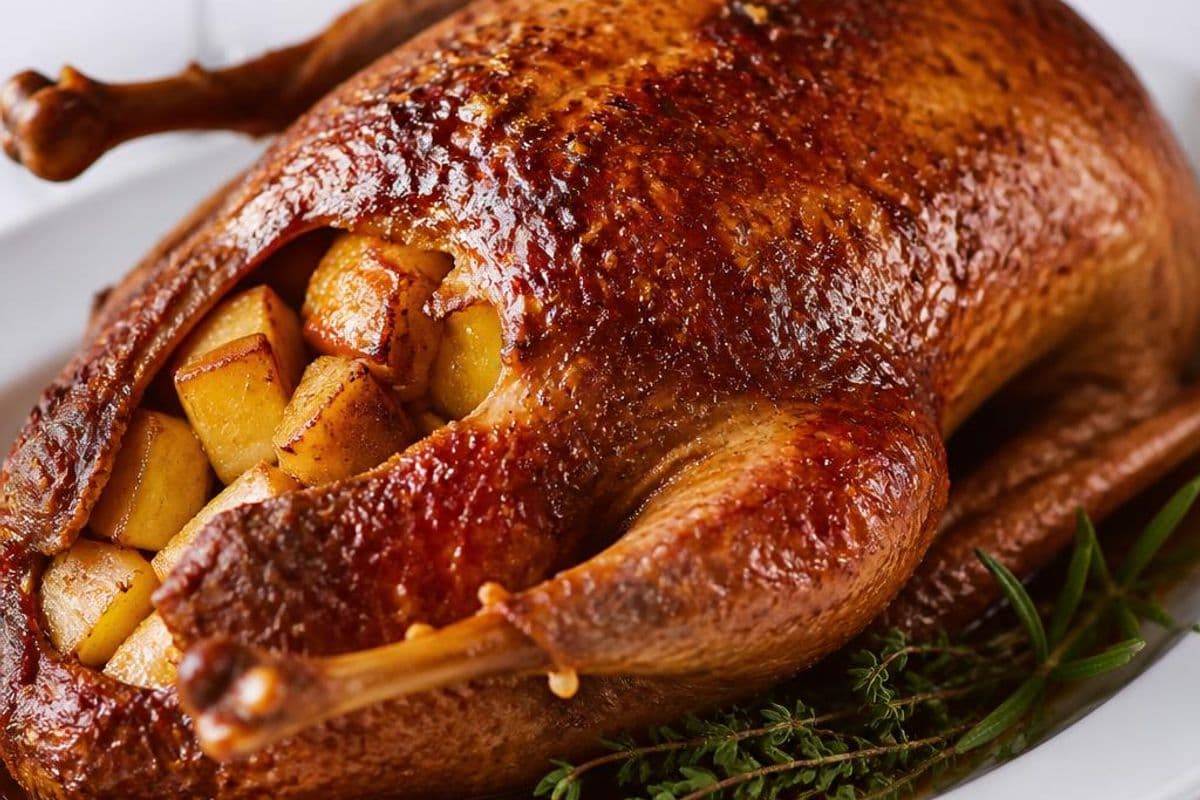
A glorious, crisp-skinned roast goose with apple stuffing and a rich red-wine gravy — perfect for Michaelmas or a festive centrepiece.
Michaelmas calls for a proper roast goose — fat enough to roast the potatoes in and grand enough to stop conversation. This version gives you a crisp, honey‑glazed skin, a simple Bramley apple stuffing and a robust red‑wine gravy.
Make this when you want theatre and flavour: it needs a little planning (the overnight dry makes all the difference), but the actual hands‑on time is modest. Save the rendered fat — it's liquid gold for roast potatoes or roasting parsnips.
Ingredients
- 4 1/2 kg Whole goose — about 4.5 kg; adjust cooking time if smaller or larger
- 25 g Sea salt
- 10 ml Black pepper — freshly ground
- 3 Bramley apples — quartered
- 2 Brown onion — one for stuffing, one for the tray, quartered
- 6 sprigs Fresh thyme
- 3 Bay leaves
- 6 Garlic cloves — crushed
- 1 Carrot — halved lengthways
- 2 Celery stalks — halved
- 500 ml Water — for the roasting tray and to deglaze
- 30 ml Honey — for glazing
- 150 ml Red wine — good drinking wine
- 200 g Goose giblets and neck — reserved for stock
- 15 ml Plain flour — for thickening gravy
- 25 g Butter
Equipment
- Large roasting tray
- Roasting rack
- Meat thermometer
- Fine sieve
Instructions
Take the goose from its packaging. Reach into the cavity and remove the goose giblets and neck; put these into a small saucepan and set aside. Pat the goose dry all over with kitchen paper.
Make the simple apple stuffing: toss the Bramley apples, one quartered brown onion, three sprigs of fresh thyme, the bay leaves and the crushed garlic cloves with a good pinch of sea salt and a grind of black pepper. Push the mixture into the cavity—do not over‑pack; it should sit loosely.
Carefully prick the skin in the fatty areas between the joints (legs and wings) with a metal skewer or fine skewer to help the fat render. Take care not to pierce through to the meat — only penetrate the skin and fat.
Season the outside and inside the cavity well with the sea salt and black pepper. Tie the legs together with kitchen string and tuck the wing tips under the bird so they don’t burn.
Set a roasting rack in a large roasting tray. Scatter the remaining quartered brown onion, the carrot and the celery stalks in the base of the tray, add the remaining fresh thyme sprigs and pour in the 500 ml water (this keeps the tray juices from burning). Sit the goose breast‑side up on the rack.
For the crispiest skin, leave the goose uncovered in the fridge overnight (or at least 12 hours). The cold, dry air tightens the skin and helps fat to render.
Preheat the oven to 220°C fan/240°C conventional. Put the goose in and roast at this high temperature for 20 minutes to jump‑start browning.
Reduce the oven to 170°C fan/190°C conventional. Roast for a further 120 minutes. Every 30 minutes, carefully tilt the tray and spoon off excess fat into a heatproof bowl (save it for roast potatoes), then baste the bird with a little of its juices.
Fifteen minutes before the end of the roasting time, brush the skin all over with the honey and return the goose to the oven for 15 minutes to glaze and deepen the colour.
Remove the goose from the oven and transfer to a warm board. Tent loosely with foil and rest for 20 minutes so the juices redistribute before carving.
Meanwhile make the gravy: put the reserved goose giblets and neck into the saucepan with the red wine and the tray juices (tip the roasting tray into the pan to deglaze with the 500 ml water if needed). Bring to the boil, then simmer gently for 10 minutes. Strain, skim off excess fat (reserve fat for potatoes), return the liquid to the pan, whisk in the butter and the plain flour to thicken, and season with sea salt and black pepper to taste.
Carve the goose: remove legs and wings first, then slice the breast across the grain. Serve with the red‑wine gravy and any preferred accompaniments (roast potatoes, braised red cabbage, apple sauce).
Tips
- Drying the bird uncovered in the fridge overnight is the single best trick for crackling skin — don’t skip it.
- When pricking the skin, only pierce the fatty layer between joints; if you see pink meat, you’ve gone too deep.
- Collect and refrigerate the rendered goose fat — it keeps for months and transforms roast potatoes.
- If you don’t have a roasting rack, build a bed of roughly chopped vegetables so the bird sits up and air circulates.
- Use a meat thermometer: the thickest part of the thigh should read about 75–80°C before resting.
Substitutions
Whole goose → Whole duck, roasted using the same method for about 35–40 minutes per kg (smaller bird will need less time)
Noticeably differentPlain flour → Cornflour, 1 tsp mixed into a little cold water then whisked into simmering stock (use less, it thickens more)
Stays closeHoney → Maple syrup, same quantity
Stays closeRed wine → Port or dark ale, 150 ml
Stays close
Nutrition
Per serving · estimated
- 880
- Calories
- 35 g
- Protein
- 10 g
- Carbs
- 78 g
- Fat
- 2 g
- Fibre
- 8 g
- Sugar
- 900 mg
- Sodium
FAQ
How long should I roast goose per kilo?
After the 20‑minute high‑heat blast, roast at 170°C fan/190°C conventional for about 30 minutes per kg. Adjust slightly for very small or large birds.
Do I need to prick the skin?
Yes — prick only the fatty areas between joints to help the fat render. Do not pierce the meat or breast, or the bird will dry out.
Can I brine the goose instead of drying it overnight?
You can brine, but drying uncovered overnight is simpler and gives better crackle. Brining will add moisture but may slightly reduce crispness.
How do I know when the goose is cooked?
Use a meat thermometer: the thickest part of the thigh should reach about 75–80°C. The legs should move freely at the joint and the juices run clear.
Community Photos
No photos yet
Be the first to share your creation!