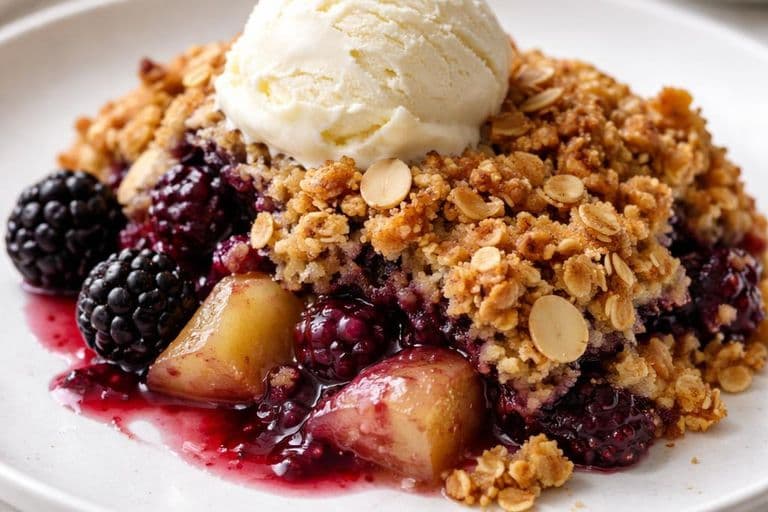
Jam Roly-Poly
A classic British suet pudding — soft, slightly crumbly suet pastry spread with bright, sticky jam, rolled, steamed or oven-baked and served warm with custard. Comforting, reliably old-fashioned and a brilliant use of leftover jam.
Jam roly-poly is culinary nostalgia in a slice: soft suet pastry rolled with a generous smear of jam, steamed or baked until pillowy and sticky. It’s the sort of pud your gran would approve of — comforting, forgiving and brilliant for using up jars of jam that are past their breakfast prime.
Make it for a cosy Sunday lunch or a simple weeknight treat with a pot of hot custard. The trick is the roll — get the tension right and you’ll have neat slices that look far more impressive than the five minutes they take to assemble.
Ingredients
- 250 g self-raising flour
- 75 g vegetarian shredded suet (or beef suet if not vegetarian) — If you prefer, use 75g very cold unsalted butter, grated (stays-close).
- 50 g caster sugar
- 5 ml fine salt
- 150 ml whole milk — Add a little extra if dough is dry, or a splash less if sticky.
- 300 g good-quality jam (raspberry or strawberry recommended) — Use a slightly runny jam so it spreads easily; seedless is easier for rolling.
- 25 g softened unsalted butter — For spreading under the jam — helps stop sogginess.
- 15 ml milk (for glazing)
- 15 ml demerara sugar — Or caster — for sprinkling on top
- 10 g butter (for greasing)
Equipment
- rolling pin
- baking tray (25 x 30cm)
- large roasting tin (for water bath)
- cling film
- pastry brush
- pudding cloth (if using steaming method)
Instructions
Preheat the oven to 180°C / 160°C fan. Grease a baking tray (approx 25 x 30cm) with the 10g butter, and set a larger roasting tin nearby for a water bath.
In a large bowl, stir together the flour, shredded suet, caster sugar and salt. If using grated cold butter instead of suet, rub it into the flour until you have a breadcrumb-like texture.
Gradually add the milk and use a round-bladed knife or spoon to bring the mixture together into a soft, slightly sticky dough. Turn onto a lightly floured surface and gently bring into one piece — do not overwork.
Wrap the dough in cling film and chill for 15 minutes to firm up — this makes rolling much easier.
Lightly flour your work surface and roll the chilled dough into a rectangle about 30 x 25cm and roughly 5–7mm thick. Spread the 25g softened butter in a thin layer over the rectangle, then spread the jam evenly, leaving a 1cm margin on all sides.
Roll the pastry up from the long edge like a Swiss roll, rolling firmly but not so tight that jam squeezes out. Pinch the seam to seal and tuck the ends under to neaten. Wrap in cling film snugly and chill for 10–15 minutes — this firms the roll so it doesn’t uncoil while cooking.
Unwrap and place the roll seam-side down on the greased tray. Brush the top with 1 tbsp milk and sprinkle with the demerara sugar. Tent the roll loosely with foil. Place the tray in a larger roasting tin and carefully pour in about 1cm of boiling water to the roasting tin (not over the pudding) — this creates steam and keeps the pastry moist.
Bake in the preheated oven for 45 minutes. After 35 minutes remove the foil so the top can brown for the final 10 minutes.
Remove from the oven and leave to rest for 5 minutes, then slice and serve warm with hot custard, cream or a dollop of clotted cream.
Optional steaming method: instead of oven-baking, wrap the filled roll in a well-buttered clean pudding cloth (or double layer of muslin), tie the ends securely and steam over simmering water for 1 hour 20 minutes. Keep the water at a steady simmer and top up if needed.
Tips
- Chill the dough before and after rolling — it makes handling much easier and prevents cracks or unravelling.
- If your jam is very thick or full of large fruit pieces, warm it briefly so it spreads easily; too-lumpy jam can tear the pastry.
- To freeze: roll and wrap the uncooked pudding tightly in cling film and foil, then freeze for up to 3 months. Bake from frozen, adding 15–20 minutes to the cooking time and keeping it tented for the first part of baking.
- If you don't have a roasting tin for a water bath, place an ovenproof dish with boiling water on a lower shelf to generate steam — do not pour water onto the pudding.
- Serve slices warm — reheating gently in a 160°C oven for 10 minutes keeps the pastry fluffy and the jam runny without drying it out.
Substitutions
vegetarian shredded suet → grated very cold unsalted butter, same weight (75g)
Stays closeself-raising flour → plain (all-purpose) flour + 2 tsp baking powder (use 250g plain + 2 tsp baking powder)
Stays closejam → thick fruit compote or lemon curd (same volume)
Noticeably differentwhole milk → plant milk (oat or soya) for a dairy-free version
Stays close
Nutrition
Per serving · estimated
- 480
- Calories
- 6 g
- Protein
- 76 g
- Carbs
- 17 g
- Fat
- 2 g
- Fibre
- 46 g
- Sugar
- 220 mg
- Sodium
FAQ
Can I make this ahead?
Yes — assemble and roll, then wrap tightly and refrigerate for up to 24 hours before baking. For longer storage freeze uncooked as described in the tips.
Can I use puff pastry instead?
You can, but puff pastry gives a very different texture — flakier and crisper rather than the traditional soft, suet-style crumb. It still tastes good, just not authentic.
How do I stop the jam leaking?
Leave a clean 1cm margin around the edges when spreading jam, roll with even tension and seal the seam by pinching the dough together. Chilling before cooking also helps the jam set.
Is it better steamed or oven-baked?
Steaming yields a softer, more traditional suet pudding texture; oven-baking (with a steam bath) is easier and still gives a moist result with a slightly firmer exterior. Choose by preference and available kit.
Community Photos
No photos yet
Be the first to share your creation!