Homemade Naan Bread (Soft Pan-Baked Naan)
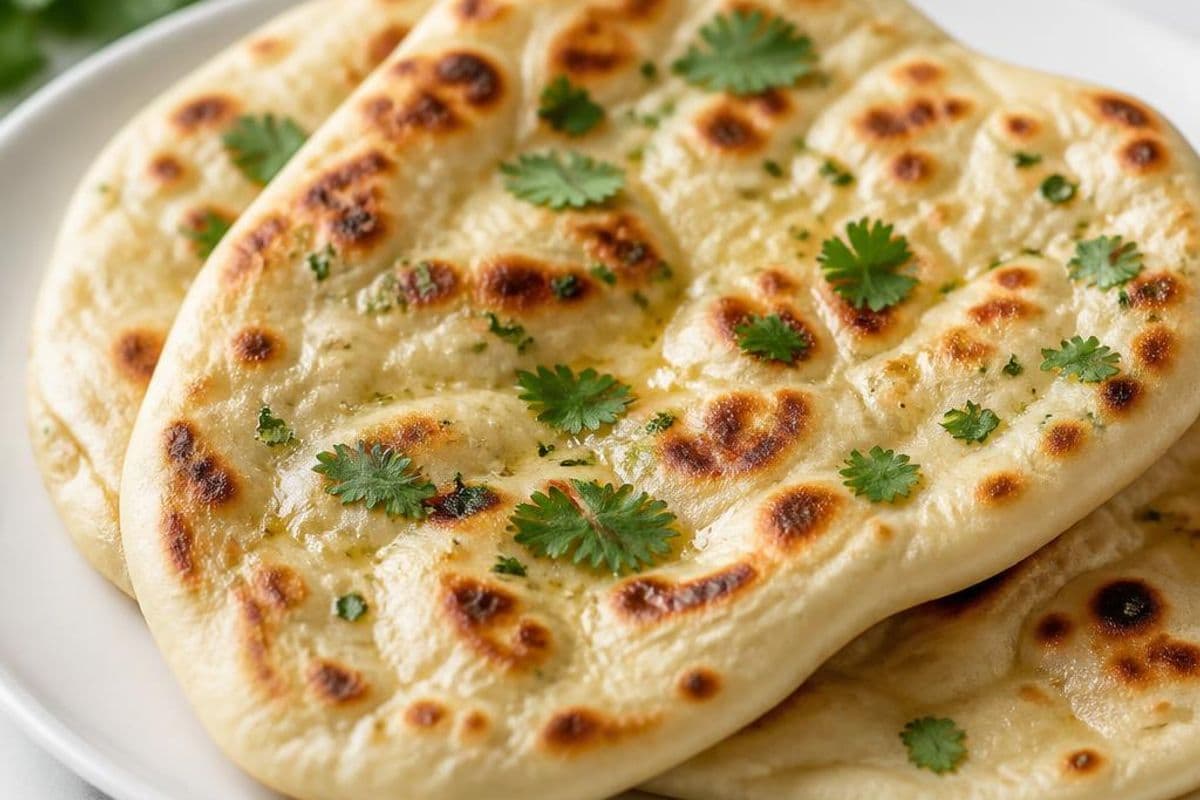
Pillowy, slightly charred flatbreads made with yoghurt and a quick yeast lift — perfect for scooping curry, mopping up sauces or turning into garlic naan. Cooked in a very hot heavy pan or under a hot grill for that tandoor-like char.
Naan: the sultry sidekick to every curry, the mop for saucy tikka and the bread you’ll want to tear and eat hot from the pan. This version keeps things simple — yoghurt and a quick yeast lift for softness, finished in a screaming-hot frying pan to mimic a tandoor.
Make it plain, slather it with garlic butter, or sprinkle nigella seeds for a bit of drama. It’s the kind of recipe that’ll make you believe you can do Indian bread at home — because you can, and it’s gloriously quick once you know the tricks.
Ingredients
- 500 g plain (all-purpose) flour
- 5 g instant dry yeast (or active dry yeast) — 1 sachet (if using active dry yeast see step notes)
- 10 g caster sugar — about 1 tbsp
- 10 g fine salt — about 1.5 tsp
- 5 g baking powder — 1 tsp
- 180 g plain yoghurt (full-fat or Greek)
- 180 ml warm milk — approx 40–45°C (120–115°F)
- 30 ml vegetable oil — 2 tbsp, plus extra for pan if needed
- 30 g melted butter or ghee — for brushing (optional)
- garlic — 2–3 cloves, crushed (optional — for garlic naan)
- fresh coriander (cilantro) — small handful, chopped (optional garnish)
- nigella seeds or sesame seeds — optional sprinkling
Equipment
- heavy-based or cast-iron frying pan
- stand mixer with dough hook (optional)
- rolling pin
- kitchen tongs
- baking sheet
Instructions
Warm the milk to about 40–45°C (warm but not hot). If using active dry yeast, stir the sugar into the warm milk, sprinkle the yeast on top and leave for 8–10 minutes until foamy. If using instant yeast, you can skip the proofing — mix the dry yeast straight into the flour in step 3.
In a large bowl (or the bowl of a stand mixer) combine the flour, salt and baking powder. If using instant yeast, add it here and stir to combine.
Make a well in the dry mix and add the yoghurt, oil and the proofed yeast + milk (or just the warm milk if using instant yeast). Bring the ingredients together with a spoon until a shaggy dough forms.
Knead the dough for 7–10 minutes by hand on a lightly floured surface, or 5–7 minutes in a stand mixer with a dough hook, until smooth, elastic and slightly tacky.
Shape the dough into a ball, put it in a lightly oiled bowl, cover with clingfilm or a damp tea towel and leave to rise in a warm spot for 60–90 minutes, or until doubled in size.
Once risen, gently deflate the dough and divide it into 6 equal pieces (for larger naan) or 8 for smaller. Roll each into a tight ball and rest, covered, for 20–30 minutes to relax the gluten.
Heat a heavy-based frying pan or cast-iron skillet over a high flame until very hot — about 3–5 minutes. You want it just smoking lightly.
Working with one ball at a time, use a rolling pin to roll each ball into a teardrop or oval roughly 18–22 cm across. Roll fairly quickly and lightly — you want some thickness so it puffs.
Lay the rolled naan in the hot pan. Cook for 60–90 seconds until you see bubbles form and the underside has golden brown spots. Flip and cook the other side for 45–60 seconds. If you like charred blisters, hold the flipped naan directly over a gas flame with tongs for 10–20 seconds, or finish briefly under a hot grill.
Transfer cooked naan to a tray, brush immediately with melted butter or ghee and sprinkle with crushed garlic, chopped coriander or nigella/sesame seeds if using.
Repeat with remaining dough. Serve warm. Naan are best the day they’re made; to reheat, warm briefly in a hot pan or oven wrapped in foil so they stay soft.
Leftovers: cool completely then store in an airtight container for 2 days or freeze separated by parchment for up to 1 month.
Tips
- If your kitchen is cold, put the bowl with the dough in the oven with the light on (oven off) for an even, gentle rise.
- Don’t over-flour the work surface; excess flour makes the surface dry and stops the naan from puffing properly.
- For garlic naan, press finely crushed garlic into the rolled dough right before cooking — do not mix raw garlic into the dough (it burns).
- If you’ve no cast iron, a heavy non-stick pan will work — preheat longer so it gets very hot.
- Make-ahead: shape the balls, place on a tray, cover and refrigerate for up to 12 hours — bring to room temperature for 30–40 minutes before rolling and cooking.
Substitutions
plain yoghurt → soured milk or kefir, same weight (may be slightly tangier)
Stays closeinstant yeast → active dry yeast (proof in warm milk with sugar for 8–10 minutes before using)
Stays closeplain (all-purpose) flour → 50:50 plain flour and strong bread flour (for slightly chewier texture)
Stays closemelted butter/ghee → olive oil or vegan butter (for dairy-free; texture slightly different)
Noticeably different
Nutrition
Per serving · estimated
- 430
- Calories
- 10 g
- Protein
- 61 g
- Carbs
- 12 g
- Fat
- 3 g
- Fibre
- 5 g
- Sugar
- 420 mg
- Sodium
FAQ
Can I make naan without yeast?
Yes — you can use baking powder (and yoghurt) for a quicker soda-yeast-free flatbread, but it won’t have the same airy chew or flavour depth as yeast-leavened naan.
Why didn’t my naan puff up?
Common causes: pan not hot enough, dough under-proofed, too much flour on the surface or rolled too thin. Ensure the pan is very hot and the dough has rested and relaxed before rolling.
Can I cook naan in the oven?
Yes — preheat your oven as hot as it will go (250–260°C) with a baking stone or inverted tray inside. Cook naan on the hot stone for 3–5 minutes until puffed and charred in spots.
How do I make garlic naan?
Top rolled naan with crushed garlic and a little chopped coriander immediately after cooking and brush with butter. For a stronger garlic hit, press crushed garlic into the dough right before it goes into the pan.
Community Photos
No photos yet
Be the first to share your creation!