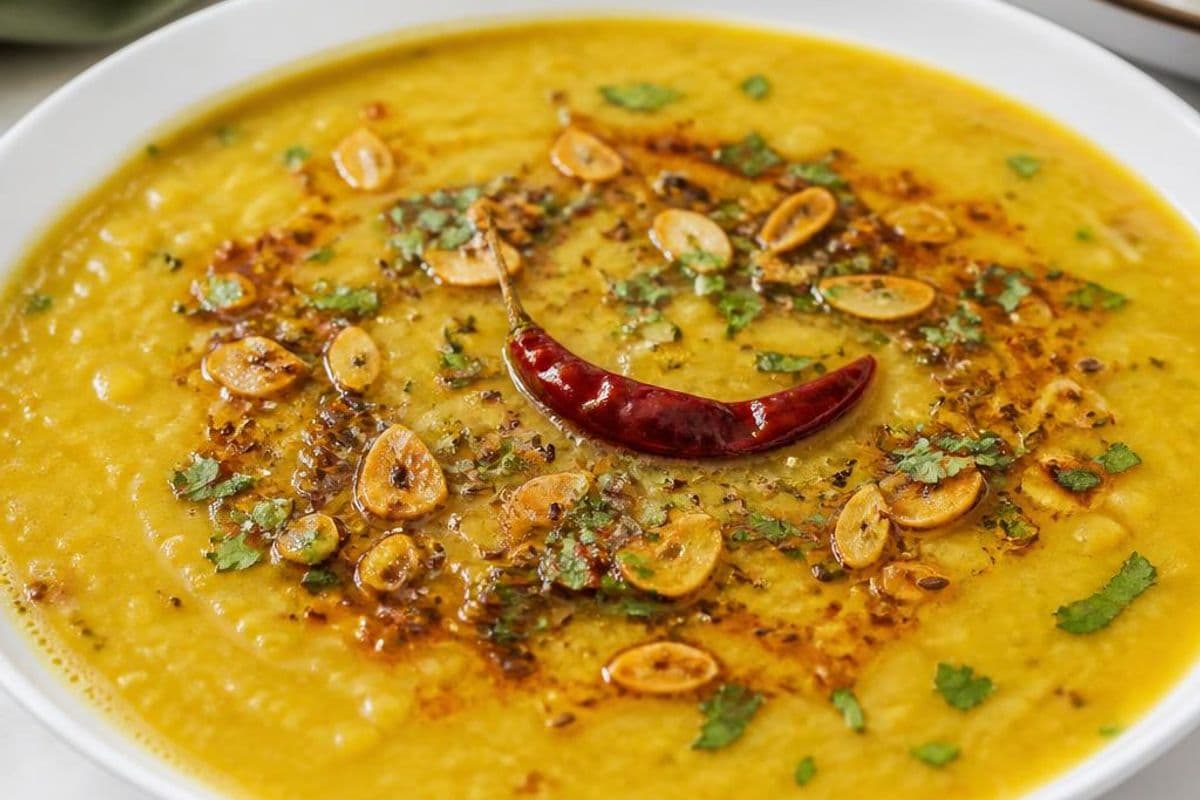
Dal Tadka
Comforting, spiced yellow toor dal finished with a sizzling garlic-cumin tadka. Bright, homey and endlessly adaptable — perfect with steamed rice or roti.
Classic dal tadka is the cozy hug of Indian cooking — humble lentils turned into a silken, spiced stew and finished with a sizzling tempering that smells like home. It’s quick, forgiving and makes a huge dent in the comfort-food quota.
Make this when you want something nourishing and fast for weeknight dinner, or double it for a crowd — it plays nicely with plain rice, jeera rice or a basket of warm rotis. The secret is a good, hot tadka: that last-minute sizzle is what makes people go back for seconds.
Ingredients
- 200 g Toor dal (split pigeon peas)
- 900 ml Water (for cooking) — Adjust to preferred consistency
- 5 ml Turmeric powder
- 5 ml Salt — Add after dal is cooked; adjust to taste
- 15 ml Ghee
- 15 ml Vegetable oil — Use neutral oil (sunflower, canola)
- 5 ml Cumin seeds
- Asafoetida (hing) — a generous pinch
- 2 whole Dried red chillies — taste and adjust
- 6 cloves Garlic — thinly sliced
- 1 medium Onion — finely chopped (about 120 g)
- 1 medium Tomato — finely chopped (about 150 g)
- 1 whole Green chilli — slit lengthways (optional)
- 5 ml Kashmiri chilli powder — for colour; use regular chilli powder if preferred
- 0 ml Garam masala
- 30 ml Fresh coriander (cilantro) — chopped, for garnish
- 15 ml Lemon juice — freshly squeezed
- Curry leaves — 6-8 leaves, optional but recommended
Equipment
- Pressure cooker or Instant Pot (or heavy-bottomed saucepan as alternative)
- Small frying pan (for tadka)
- Ladle or potato masher
- Wooden spoon
Instructions
Rinse the toor dal thoroughly under cold water until the rinse water runs clear. Optional: soak the rinsed dal for 10–15 minutes to shorten cooking time and improve texture.
Pressure-cooker method (fast): Put the rinsed dal, 900 ml water and turmeric in a 3–litre pressure cooker. Close the lid. Cook on medium-high until 3 whistles, then lower heat to medium and cook for another 5 minutes. Switch off and allow natural pressure release for 10 minutes before opening. (If using an Instant Pot: cook on MANUAL/Pressure Cook for 10 minutes, then natural release 10 minutes.)
Stovetop alternative (if you didn't pressure-cook): Put dal, water and turmeric in a heavy-bottomed saucepan, bring to a vigorous boil, skim any foam, then reduce heat to a gentle simmer. Partially cover and simmer 25–30 minutes, stirring and adding a little hot water if it becomes too thick, until dal is very soft and breaking apart.
Once the dal is cooked and soft, lightly mash it with a ladle or potato masher to reach a creamy-but-still-slightly-textured consistency. Add salt now and stir. Simmer gently for 4–5 minutes so the flavours settle and the dal thickens slightly. Adjust consistency with a little hot water if needed.
Prepare the tadka (tempering): Heat a small frying pan over medium heat. Add the vegetable oil and ghee. When shimmering, add cumin seeds, a pinch of asafoetida and the dried red chillies. Fry quick and watchful — as soon as cumin pops (about 10–15 seconds), add the sliced garlic.
Sauté the garlic for about 20–30 seconds until pale golden, then add the chopped onion and curry leaves (if using). Cook, stirring, until the onion is soft and translucent (about 3–4 minutes).
Add the chopped tomato and slit green chilli to the pan. Cook until the tomato softens and oil starts to separate at the edges (2–3 minutes). Stir in Kashmiri chilli powder and garam masala and fry for another 20–30 seconds to release the spices' aroma.
Pour the hot tadka straight into the cooked dal. You should hear an energetic sizzle — that’s the signal the aromatics are meeting the dal and releasing flavour. Stir it through, cover the pan, and let sit for 1–2 minutes so the flavours infuse.
Finish the dal: Stir in the lemon juice and chopped coriander. Taste and adjust salt, chilli or lemon as desired. If the dal is very thick, add a splash (1–2 tbsp) of hot water and reheat for 30–60 seconds.
Serve immediately with steamed basmati rice, jeera rice or hot rotis. Leftovers keep well in the fridge for 3–4 days and reheat gently on the stove—add a splash of water when reheating.
Tips
- Always add salt after the lentils are cooked. Salt early can slow softening, especially with older dal.
- If your dal is too thin, simmer uncovered for a few minutes to reduce; if it’s too thick, add hot water a tablespoon at a time and reheat.
- Make the tadka in a separate small pan and pour hot — the dramatic sizzle is essential for aroma. Do not let the garlic burn; keep the flame moderate.
- Leftovers freeze well in portions (up to 2 months). Thaw overnight in the fridge and reheat slowly on the stove, adding a little water.
- If your dal has a gritty texture, it just needs a bit more cooking. Older pulses often take longer — use the stovetop simmer method until completely soft.
Substitutions
Toor dal → Yellow moong dal or split masoor dal, same quantity
Stays closeGhee → Use 2 tbsp vegetable oil (or oil + a little vegan butter) for a dairy-free/vegan version
Noticeably differentKashmiri chilli powder → Paprika for colour (milder) or regular red chilli powder for heat
Stays closeFresh lemon juice → 2 tsp tamarind paste diluted in a little water for tang (use sparingly)
Noticeably different
Nutrition
Per serving · estimated
- 240
- Calories
- 11 g
- Protein
- 29 g
- Carbs
- 9 g
- Fat
- 4 g
- Fibre
- 3 g
- Sugar
- 600 mg
- Sodium
FAQ
Can I make dal tadka without a pressure cooker?
Yes — use a heavy-bottomed saucepan and simmer the dal for 25–30 minutes until very soft, stirring occasionally and adding hot water as needed.
Why did my dal turn out grainy?
Most likely undercooked. Cook until the lentils are breaking down and very soft; older lentils can take longer. Never add salt before the dal is fully cooked.
Can I make this vegan?
Yes — substitute the ghee with extra vegetable oil or a neutral oil plus a small knob of vegan butter for richness. The taste will be slightly different but still delicious.
How do I store and reheat leftovers?
Refrigerate in an airtight container for 3–4 days or freeze in portions up to 2 months. Reheat gently on the stove with a splash of water until piping hot.
Community Photos
No photos yet
Be the first to share your creation!