Classic Margherita Pizza (Neapolitan-style)
Thin, blistered-crust Margherita with fresh San Marzano tomatoes, torn mozzarella and basil — simple ingredients, big flavour. Made for home ovens with tips for both quick and long cold-ferment doughs.
This is the classic Margherita — three colours, one glorious pizza. It’s deceptively simple: great flour, sun-ripened tomatoes and fresh mozzarella do the heavy lifting.
Make this when you want a proper pizza night at home. Use the quick rise if you’re impatient, or cold-ferment the dough for 24–48 hours if you want a lighter, more flavourful crust. Either way, big heat and light hands are the keys.
Ingredients
- 500 g 00 pizza flour (or strong plain flour)
- 325 ml water — lukewarm (20–25°C)
- 10 g fine sea salt
- 5 g instant yeast — or 9g fresh yeast
- 15 ml extra-virgin olive oil — optional in dough
- 400 g canned San Marzano tomatoes — crushed by hand or blended to a rustic sauce
- 5 ml fine sea salt (for sauce)
- 200 g fresh buffalo mozzarella or fior di latte — well drained and torn
- fresh basil leaves — a handful (10–12 leaves)
- 10 ml extra-virgin olive oil (finish) — for drizzling
- semolina or extra flour — for dusting the peel
Equipment
- pizza stone or steel
- pizza peel
- oven thermometer
- kitchen scale
- bench scraper
Instructions
Weigh the flour into a large bowl. Pour the warm water into the flour and mix with your hand or a spoon until a shaggy mass forms (no need to add yeast or salt yet). This autolyse helps gluten develop and gives a silkier dough.
Sprinkle the salt evenly over the dough. Dissolve the instant yeast in a tablespoon of the remaining water, then add it and the olive oil to the dough. Mix until it comes together, then turn out onto a lightly floured surface and knead for 8–10 minutes until smooth and slightly tacky.
Shape into a ball and place in a lightly oiled bowl. Cover tightly with cling film or a lid.
Bulk ferment. Option A (room-temp, quicker): leave at room temperature (20–22°C) for 90 minutes to 2 hours until roughly doubled. Option B (preferred for flavour): refrigerate for 24–48 hours for a slow cold ferment — dough will develop more flavour and better crust char. If using cold ferment, bring dough back to room temperature for 1–2 hours before shaping.
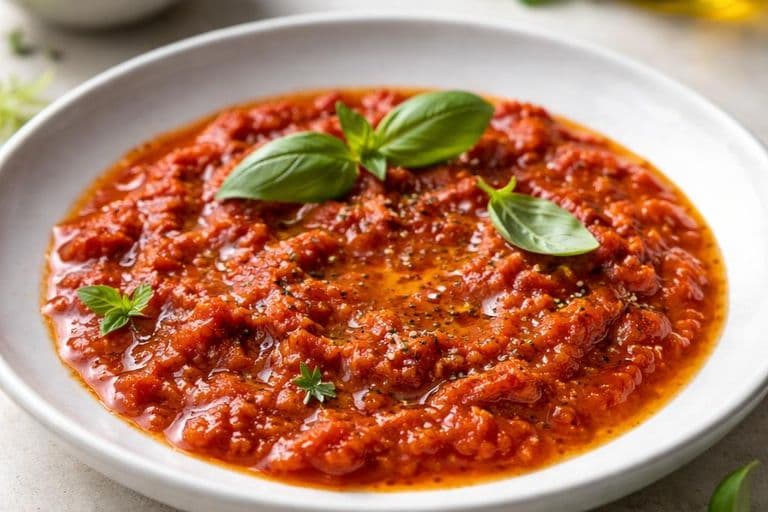
Prepare the sauce: crush the San Marzano tomatoes by hand or pulse once in a blender for a slightly smoother texture. Season with 1 tsp fine sea salt and a tiny pinch of sugar if the tomatoes taste very acidic. Do not cook the sauce.
If you used the fridge method, remove dough to the counter and divide into two equal pieces. Shape each into a tight ball by folding edges under. Rest on a lightly floured tray, covered, for 30 minutes at room temperature (final proof).
Preheat your oven as high as possible with a pizza stone or steel on the middle rack. Preheat at least 45–60 minutes — the stone/steel must be screaming hot. Aim for 250–300°C if your oven allows. Use an oven thermometer to check actual temperature.
Prepare the topping and drainage: tear the mozzarella into pieces and spread on a paper towel to drain excess whey for 10–15 minutes (this reduces sogginess). Tear basil leaves and have olive oil ready.
Shape each dough ball into a 10–12 inch disc by hand: press from the centre outwards leaving a 1–1.5 cm rim; lift and use gravity and your knuckles to stretch (do not use a rolling pin). Dust your peel with semolina or flour to prevent sticking.
Assemble on the peel: spoon 60–80 g (about 3–4 tbsp) of the crushed tomato sauce into the centre and spread lightly, leaving the rim clear. Scatter 100 g torn mozzarella across the pizza and add a few basil leaves (reserve some for after bake). Drizzle a little olive oil.
Bake (two options): Option A — Hot stone/steel method (best): slide pizza onto the preheated stone/steel and bake at 290–300°C for 4–6 minutes until the crust blisters with leopard spots and cheese is bubbling. Option B — Conventional home oven: bake at the oven’s maximum (usually 230–250°C) on the preheated stone/steel for 8–12 minutes, rotating halfway, until crust is golden and cheese melted.
Remove pizza when done, add a few fresh basil leaves, a final drizzle of extra-virgin olive oil, and rest for 1–2 minutes before slicing.
Tips
- Preheat your stone or steel at least 45–60 minutes — a properly heated surface is more important than fiddling with toppings.
- Drain and pat mozzarella dry for 10–15 minutes to stop the centre going soggy.
- Stretch the dough by hand — a rolling pin will squash the air pockets that make the cornicione (rim) puffy.
- If you’re short on time, use 3 g instant yeast and a warm place for a 1.5–2 hour rise; for best flavour, cold-ferment 24–48 hours with 0.2–0.5 g yeast (tiny amount) in the fridge.
- Use semolina on the peel to help the pizza slide; if it sticks, give it a quick shake or use a spatula to loosen before sliding.
Substitutions
00 pizza flour → strong plain flour (same quantity)
Stays closefresh buffalo mozzarella → fior di latte (cow's milk mozzarella), same quantity
Stays closeSan Marzano tomatoes → good-quality canned plum tomatoes or passata, blend lightly
Stays closeinstant yeast → active dry yeast (use 1.25× the instant amount) or fresh yeast (3× instant weight)
Noticeably different
Nutrition
Per serving · estimated
- 1200
- Calories
- 45 g
- Protein
- 150 g
- Carbs
- 45 g
- Fat
- 6 g
- Fibre
- 6 g
- Sugar
- 1200 mg
- Sodium
FAQ
Can I use a rolling pin to shape the pizza?
Avoid it — a rolling pin presses out the air in the rim. Use your hands and knuckles to stretch the dough for a light, airy cornicione.
How do I stop the pizza base from being soggy?
Use a very hot stone/steel, drain the mozzarella, use a light hand with sauce (60–80 g), and preheat thoroughly. Also assemble and slide into the oven quickly so the dough doesn’t absorb excess moisture.
What temperature should I bake at if my oven only goes to 230°C?
Preheat a heavy stone or steel thoroughly and bake at your oven’s maximum (230–250°C). Expect 8–12 minutes baking time; rotate the pizza halfway to encourage even browning.
Can I make the dough ahead?
Yes — cold-ferment the dough covered in the fridge for 24–48 hours. It improves flavour and texture. Bring back to room temperature for 1–2 hours before shaping.
Community Photos
No photos yet
Be the first to share your creation!