Classic Ligurian Focaccia (No‑Knead)
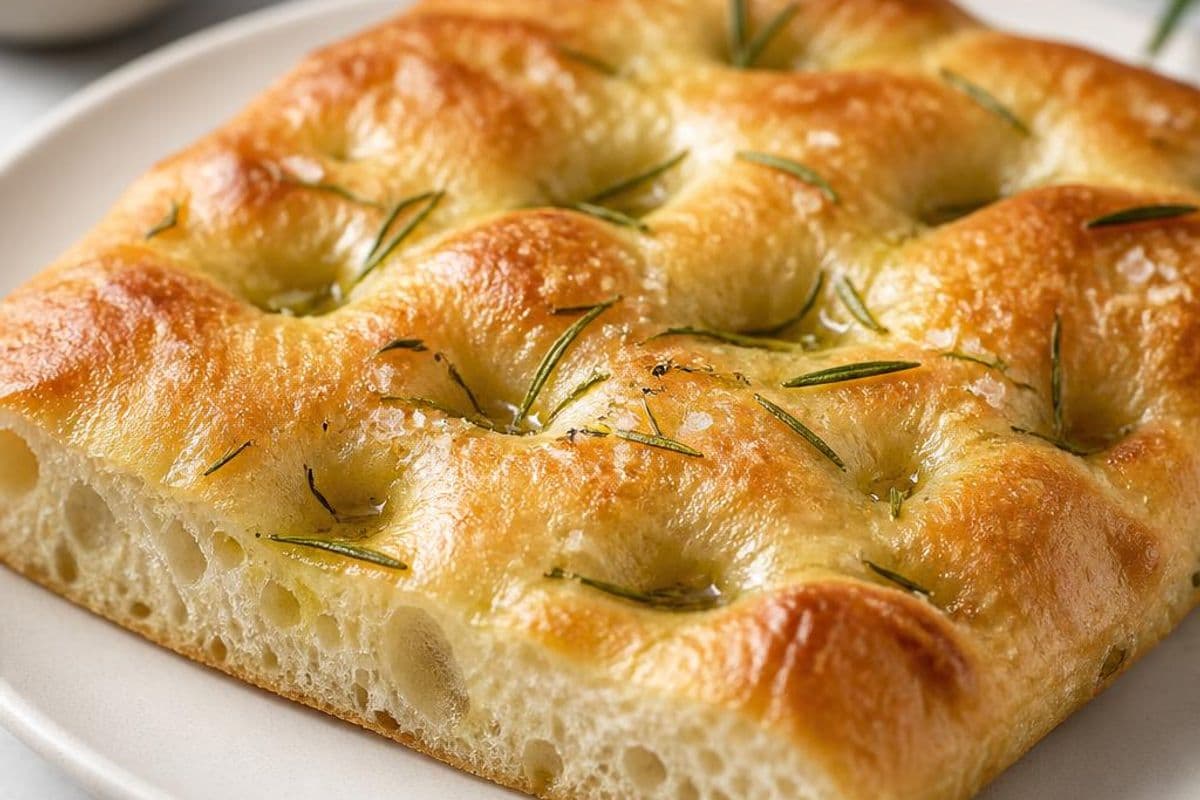
A pillowy, dimpled focaccia with a crisp golden top, glossy from olive oil and flecked with rosemary and coarse sea salt. No heavy kneading — just time, hydration and a hot oven.
Focaccia is the kind of bread that makes you feel like an Italian Nonna is supervising from the next room — simple, bold and ridiculously satisfying. This no‑knead version gives you that characteristic airy interior and crisp, olive‑oil‑kissed crust without an afternoon of elbow grease.
Make it for a picnic, as an impressive side for soup or salad, or slice it and use as the base for an open‑faced sandwich. The magic is hydration, gentle handling and a hot oven — plus a good glug of olive oil.
Ingredients
- 500 g strong white (bread) flour
- 380 ml lukewarm water (about 22–26°C / 72–79°F)
- 5 g instant yeast (fast‑acting) — 1 standard sachet
- 10 g fine sea salt (for dough)
- 60 ml extra virgin olive oil (total) — 15 ml in dough, ~45 ml for pan/topping
- coarse sea salt or flaky salt (for finishing) — about 1–2 tsp, to taste
- fresh rosemary — 1–2 tbsp chopped, or 6–8 small sprigs
- optional toppings — halved cherry tomatoes, olives, thin garlic slices
Equipment
- 30 x 20 cm roasting tin (or similar baking tray)
- oven thermometer (helpful)
- bench scraper
- clingfilm or large bowl lid
Instructions
Measure flour into a large mixing bowl. Stir in the instant yeast to distribute it evenly.
Add 380 ml lukewarm water and 15 ml (1 tbsp) olive oil to the flour. Mix with a wooden spoon or dough hook until a sticky, shaggy dough forms and there are no dry pockets of flour.
Sprinkle in the 10 g fine sea salt and fold the dough through 6–8 times until the salt is incorporated. The dough will be sticky and loose; that’s correct.
Cover the bowl with clingfilm or a tight lid and leave to rest for 20 minutes (autolyse).
Do a set of stretch‑and‑folds: with wet hands grab one edge of the dough, stretch it up and fold over the middle — turn the bowl and repeat 4 times. Cover and leave for 45–60 minutes, until roughly doubled.
Generously oil a 30 x 20 cm (roughly) roasting tin with about 2 tbsp (30 ml) olive oil. Tip the dough into the tin, turn it so the top is oiled (this stops sticking) and shape it gently to roughly fill the tin — don’t press hard.
Cover the tin with lightly oiled clingfilm and leave to prove for 30–40 minutes, until the dough rises noticeably and is pillowy (it need not double). Meanwhile, preheat your oven to 230°C (445°F) with the rack in the middle.
Using lightly oiled fingertips, dimple the dough all over, pressing down to the bottom of the tin in places to create those classic pockets. Drizzle the remaining olive oil over the top, scatter chopped rosemary and any optional toppings, then sprinkle coarse sea salt.
Bake in the preheated 230°C oven for 18–25 minutes, rotating the tray halfway if your oven runs unevenly, until the focaccia is deep golden-brown on top and sounds hollow when tapped.
Remove from the oven, immediately brush any remaining olive oil into the dimples and leave to cool in the tin for 10 minutes. Turn out onto a rack and cool another 10–15 minutes before slicing.
Tips
- Keep the dough wet: the high hydration is what makes big bubbles. Don’t be tempted to add more flour when mixing.
- If you have time, do a slow overnight prove in the fridge (cover the oiled tin and chill 8–18 hours) for deeper flavour; bring to room temperature before the final proof and dimpling.
- Oil your fingertips liberally when dimpling to avoid tearing the dough and to create those glossy pockets.
- If your oven colours unevenly, bake on the middle shelf and rotate the tray halfway through the bake.
- To reheat day‑old focaccia, warm in a 180°C oven for 5–8 minutes for a revived crust and soft interior.
Substitutions
strong white (bread) flour → plain (all‑purpose) flour, same weight (500 g)
Stays closeinstant yeast → active dry yeast, 9 g (bloom in 25 ml warm water first)
Stays closeextra virgin olive oil → sunflower or light olive oil, same volume (60 ml)
Noticeably differentfresh rosemary → fresh thyme or chopped oregano, same quantity
Stays close
Nutrition
Per serving · estimated
- 290
- Calories
- 7 g
- Protein
- 48 g
- Carbs
- 8 g
- Fat
- 2 g
- Fibre
- 2 g
- Sugar
- 600 mg
- Sodium
FAQ
Why is my focaccia dense?
Most often it’s from too little hydration or handling the dough roughly (pressing out gas). Use the wet dough as directed, avoid extra flour and be gentle when shaping and dimpling.
Can I make the dough ahead?
Yes — after step 5 you can cover and refrigerate the dough (in the tin or bowl) for 8–18 hours. Bring to room temperature, then proceed with shaping, final proof and bake.
How do I get big air pockets?
High hydration, minimal degassing and a good first prove are key. Perform a couple of stretch‑and‑folds rather than kneading; be gentle when transferring and shaping so bubbles stay intact.
Can I freeze focaccia?
Yes. Freeze cooled slices wrapped tightly for up to 2 months. Reheat from frozen in a 180°C oven for 8–12 minutes.
Community Photos
No photos yet
Be the first to share your creation!