Classic Italian Tiramisu (Cooked Zabaglione Method)
A silky, coffee-soaked layer cake of ladyfingers and mascarpone, built with a cooked zabaglione for safety and stability. Velvety, boozy and unapologetically indulgent—perfect made a day ahead.
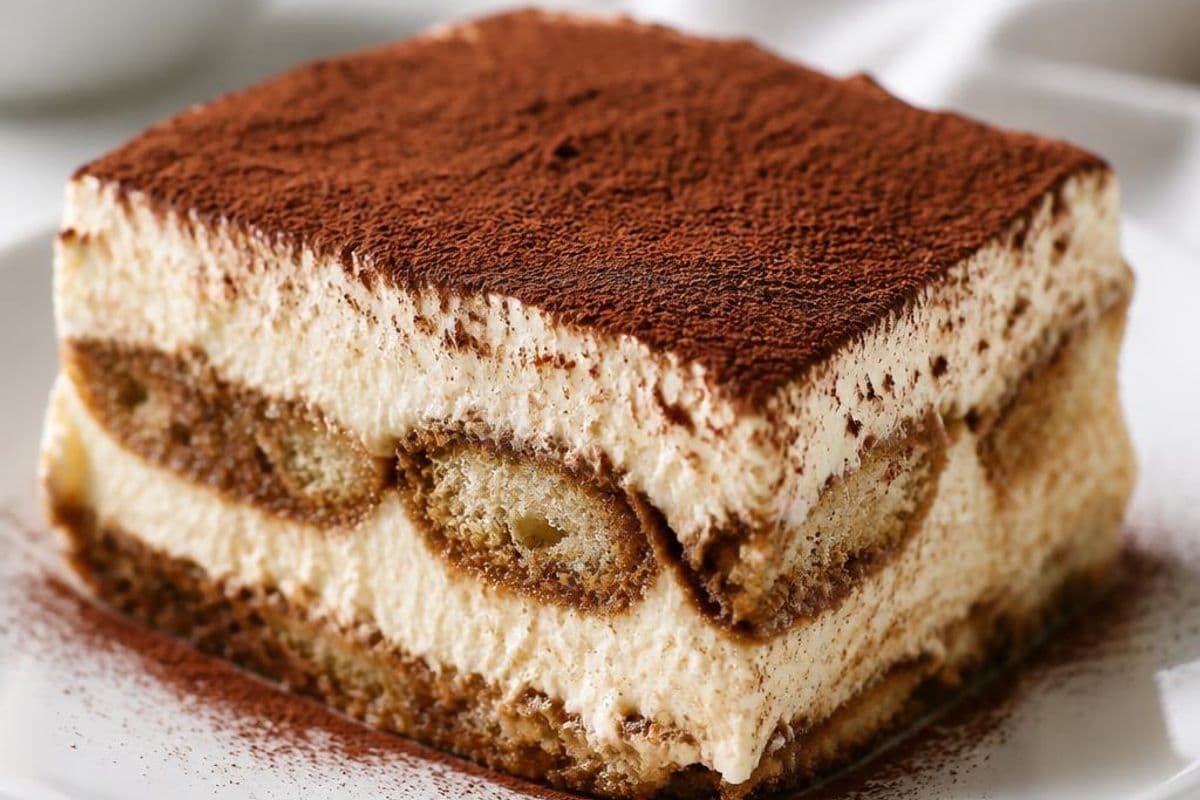
This is the classic, no-nonsense tiramisu: coffee-soaked ladyfingers layered with a silky mascarpone-zabaglione filling. I use a cooked zabaglione here so you keep the silkiness but remove most of the worry about raw eggs—smart, safe and utterly delicious.
Make it the day before a dinner party and watch everyone pretend they made room for dessert. The flavours only get better overnight: punchy espresso, a whisper of Marsala (or rum), and that cocoa finish make it properly Italian and dangerously moreish.
Ingredients
- 300 ml freshly brewed espresso, cooled
- 45 ml Marsala wine or dark rum (optional) — about 3 tbsp; omit or replace with extra coffee if preferred
- 4 egg yolks (large)
- 100 g caster sugar
- 500 g mascarpone — full-fat mascarpone for best texture
- 4 egg whites (large)
- 30 g caster sugar (for whites)
- 5 ml vanilla extract
- 200 g savoiardi (ladyfingers) — about 24-28 depending on size
- 30 ml unsweetened cocoa powder, for dusting
- 30 g dark chocolate, for shavings (optional) — optional garnish
- 1 pinch fine sea salt
Equipment
- 20 x 20 cm baking dish (or similar)
- heatproof bowl for bain-marie
- electric whisk or stand mixer
- offset spatula
- fine-mesh sieve for cocoa dusting
Instructions
Brew strong espresso and leave to cool to room temperature. Stir in the Marsala or rum (if using). Pour into a shallow bowl so ladyfingers can be dipped quickly.
Set up a bain-marie: bring a pan with an inch or two of simmering water to a gentle simmer (not rolling). In a heatproof bowl that sits over but not touching the water, whisk the egg yolks and 100g caster sugar until combined.
Place the bowl over the pan and whisk continuously until the yolk-sugar mixture becomes pale, thick and ribbons when the whisk is lifted. This usually takes 8–12 minutes. (If you have a probe, heat the mixture to 71°C / 160°F to pasteurise.) Remove from heat and let it cool for 5 minutes.
In a separate bowl, blot the mascarpone with a spatula to soften slightly, then fold the warm (not hot) zabaglione into the mascarpone with the vanilla until smooth and lump-free. Do not over-whisk — a few small air pockets are fine.
In a clean bowl, whisk the egg whites with a pinch of salt until frothy. Gradually add 30g sugar and whisk to glossy soft peaks (about 3–4 minutes with an electric whisk).
Fold one-third of the whipped whites into the mascarpone mixture briskly to loosen it, then gently fold in the remaining whites in two additions using a figure-8 motion. Keep as much air as possible.
Quickly dip each ladyfinger into the cooled coffee for 1–2 seconds (don’t soak). Line the base of a 20 x 20 cm (or similar) dish with a single layer of dipped ladyfingers, breaking any to fit neat edges.
Spread half the mascarpone mixture over the first layer of ladyfingers in an even layer (use an offset spatula). Repeat with a second layer of dipped ladyfingers and top with the remaining mascarpone mixture, smoothing the surface.
Cover with clingfilm and chill in the fridge for at least 4 hours, preferably 8–12 hours or overnight. This lets the flavours meld and the texture set.
Just before serving, dust the top generously with unsweetened cocoa powder through a fine sieve and scatter chocolate shavings if using.
Tips
- Use strong, freshly brewed espresso (or cold-brew concentrate) for the best coffee flavour—instant will work but tastes flatter.
- Test-dip one ladyfinger to decide the exact dunk time: 1–2 seconds usually, but biscuits vary. They should be damp, not collapsing.
- If you don’t want to cook eggs, substitute a stabilised whipped cream mixture (300ml double cream whipped to soft peaks and folded into 400g mascarpone) — honesty: a slightly lighter but less authentic texture.
- Make ahead: prepare the tiramisu 8–24 hours before serving. Store covered in the fridge; the cocoa is best dusted just before serving.
- If the zabaglione begins to curdle while cooking, remove from heat and whisk vigorously off the bain-marie to smooth it. If it’s completely scrambled, start again—this is why gentle heat and constant whisking are critical.
Substitutions
Marsala or dark rum → extra 45ml cooled espresso or 45ml brandy
Stays closesavoiardi (ladyfingers) → thin slices of sponge cake or genoise
Noticeably differentmascarpone → 300g full-fat cream cheese + 200ml double cream (whip cream to soft peaks and fold in)
Noticeably differentraw eggs (zabaglione) → use pasteurised eggs or make a whipped-cream-based filling as described in tips
Stays close
Nutrition
Per serving · estimated
- 481
- Calories
- 8 g
- Protein
- 39 g
- Carbs
- 31 g
- Fat
- 2 g
- Fibre
- 23 g
- Sugar
- 110 mg
- Sodium
FAQ
How long should I chill tiramisu?
At least 4 hours, but 8–12 hours or overnight gives the best texture and flavour melding. Overnight is recommended for clean slices.
Is it safe to use raw eggs?
This recipe uses a cooked zabaglione heated to around 71°C / 160°F which pasteurises the yolks. If you prefer, use pasteurised eggs or the whipped-cream-based filling substitution.
Can I make tiramisu in individual glasses?
Yes—use the same layering method but reduce coffee dunk time slightly. Individual servings chill faster (4–6 hours) and look very elegant.
Can I freeze tiramisu?
Tiramisu can be frozen for up to 1 month in an airtight container. Thaw overnight in the fridge and dust with cocoa just before serving. Texture may be slightly softer after freezing.
Community Photos
No photos yet
Be the first to share your creation!