Classic British Bread and Butter Pudding
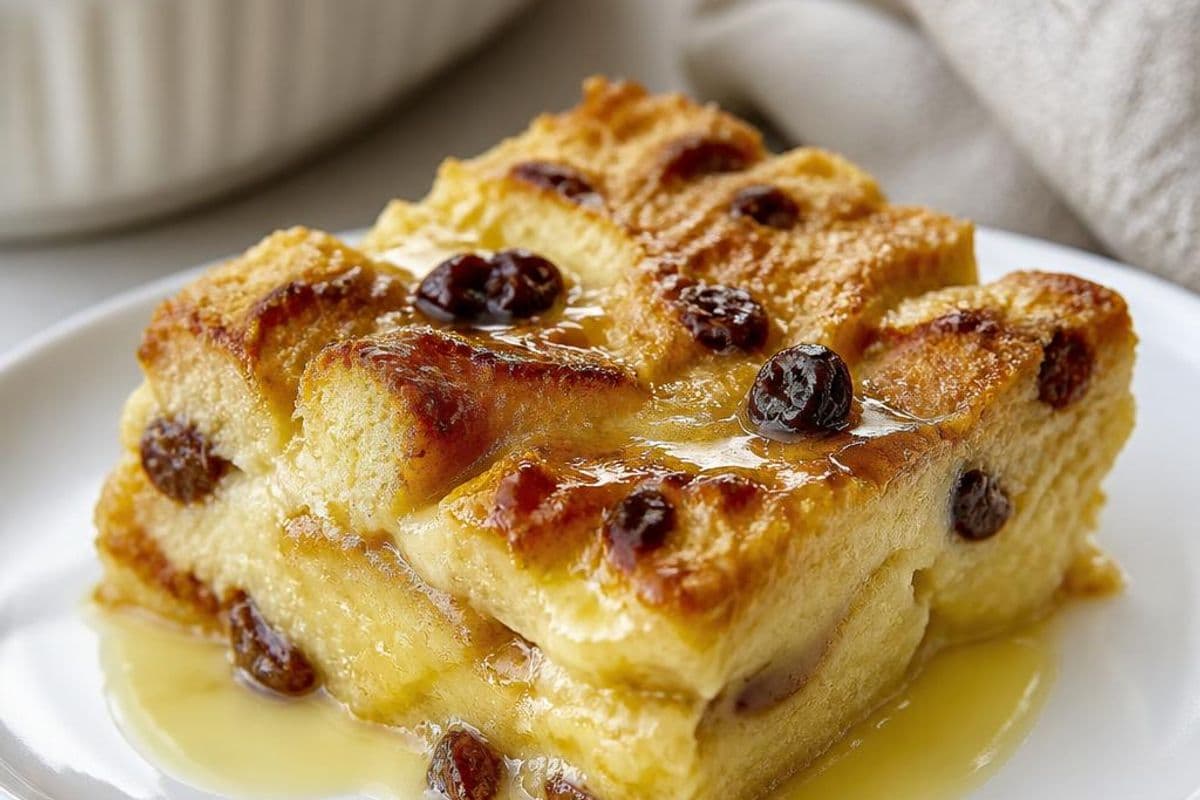
A cosy, old‑school British pud — layers of buttery sliced bread, plumped raisins and a vanilla‑spiked egg custard baked until golden and impossibly custardy in the middle.
Bread and butter pudding is the culinary equivalent of a hug in a dish — thrifty, comforting and impossibly satisfying. It’s the perfect make‑use pudding for a loaf that’s been sitting around, and the custard‑to‑bread ratio is what makes a good one sing.
Make it for a cosy Sunday tea, as a comforting finish to a midweek supper, or anytime you want nostalgic British comfort without fuss. A bain‑marie and a short resting time will deliver that silken, slightly wobbly centre everyone argues about.
Ingredients
- 8 slices White bread (preferably day‑old, crusts left on or trimmed)
- 60 g Unsalted butter, softened — for spreading and greasing
- 80 g Raisins or sultanas — optional — see soaking note
- 30 ml Dark rum or hot water — optional: use rum to soak raisins for 10–15 minutes (or same volume hot water)
- 450 ml Whole milk
- 150 ml Double cream
- 4 Large eggs
- 100 g Caster sugar — reduce to 75g for less sweet
- 1 Vanilla pod (or vanilla extract) — scrape seeds from pod, or use 1 tsp vanilla extract
- 1 zest Fresh lemon zest — zest of 1 lemon
- 0 ml Freshly grated nutmeg
- 0 ml Salt
- Icing sugar — for dusting (optional)
Equipment
- 20 x 20 cm (approx) ovenproof dish (2‑litre)
- Deep roasting tin (for bain‑marie)
- Small saucepan
- Fine sieve
- Whisk
Instructions
Preheat the oven to 170°C fan (190°C conventional / 375°F). Grease a 20 x 20 cm (or similar 2‑litre) ovenproof dish with a little of the softened butter.
If using raisins: put them in a small bowl and pour over the rum or hot water. Leave to plump for 10–15 minutes, then drain (reserve the soaking liquid to add to custard if you like).
Butter one side of each bread slice (about 60g total butter). If slices are thick, halve each diagonally to make neat overlapping layers in the dish.
Arrange one third of the buttered slices, buttered side up, in the bottom of the dish, overlapping slightly. Scatter over a third of the drained raisins, a little lemon zest and a light dusting of sugar. Repeat to make 2 more layers, finishing with bread on top.
Warm the milk, cream, vanilla seeds (or extract), sugar and salt in a saucepan until just below boiling point (small bubbles at the edges). Remove from the heat and let it sit for 2 minutes to cool very slightly.
In a separate bowl, whisk the eggs lightly. Slowly pour about a quarter of the warm milk mixture into the eggs, whisking constantly to temper them. Then pour the tempered eggs back into the saucepan and whisk to combine.
Strain the custard through a fine sieve over the layered bread to remove any cooked egg bits and the vanilla pod husk. If you reserved raisin soaking liquid, add 1–2 tbsp now to the custard for extra flavour.
Gently press the bread down so it is mostly submerged, then slowly pour any remaining custard over to ensure the top is evenly soaked. Let the dish stand for 20 minutes so the bread absorbs the custard.
Option A (recommended): Place the pudding dish in a deep roasting tin and pour hot water into the tin to come roughly one‑third up the sides of the pudding dish (bain‑marie). This gives the most even, custardy bake. Option B: bake without water for a slightly firmer top.
Bake in the preheated oven for 40–45 minutes until the top is golden and a knife inserted in the centre comes out with just a little custard clinging to it (it will continue to set as it cools).
Remove the pudding from the oven and water bath. Leave to stand for 10 minutes before dusting with icing sugar and serving warm with pouring cream, custard or good vanilla ice cream.
Tips
- Use day‑old or slightly stale bread — it soaks custard without going to mush. Slightly thinner slices (about 1 cm) give an even custard layer.
- Warm milk before adding to eggs and always temper eggs slowly to prevent scrambling; straining the custard gives a silky finish.
- Soak raisins in rum or hot water to plump them — the soaking liquid (1–2 tbsp) can be stirred into the custard for extra flavour.
- Bake the pudding in a bain‑marie for an even, custardy set. If you skip the water bath you’ll get a firmer, more souffle‑like top.
- Make ahead: assemble, cover and refrigerate up to 12 hours. Bring to room temperature for 20–30 minutes before baking and add an extra 5–10 minutes to the bake time.
Substitutions
White bread → Pain de mie, brioche or challah (same quantity)
Stays closeDouble cream + whole milk → All whole milk (600 ml) for a lighter pudding
Noticeably differentRaisins → Chopped dried apricots or currants (same weight)
Stays closeCaster sugar → Light brown sugar (same weight) for a deeper caramel note
Stays closeDark rum → Strong tea or orange juice for soaking raisins (same volume)
Noticeably different
Nutrition
Per serving · estimated
- 480
- Calories
- 9 g
- Protein
- 51 g
- Carbs
- 28 g
- Fat
- 3 g
- Fibre
- 24 g
- Sugar
- 350 mg
- Sodium
FAQ
Can I use wholemeal or gluten‑free bread?
Yes. Wholemeal will give a nuttier, denser texture (good but different). For gluten‑free, use a sturdy GF loaf — results vary but it works.
Why is my pudding rubbery or curdled?
Usually from overheating — either the milk boiled before mixing or the oven was too hot/overbaked. Warm the milk gently and avoid a hard boil; aim for a gentle wobble in the centre when you remove it.
Can I make this ahead and reheat?
Assemble the night before and refrigerate; bake from chilled with an extra 5–10 minutes. Reheat slices in a low oven (150°C fan) for 10–12 minutes or gently in a microwave.
What should I serve it with?
Classic partners are pouring cream, warm custard or good quality vanilla ice cream. A spoonful of marmalade on the side is delightfully retro.
Community Photos
No photos yet
Be the first to share your creation!