Cacio e Pepe
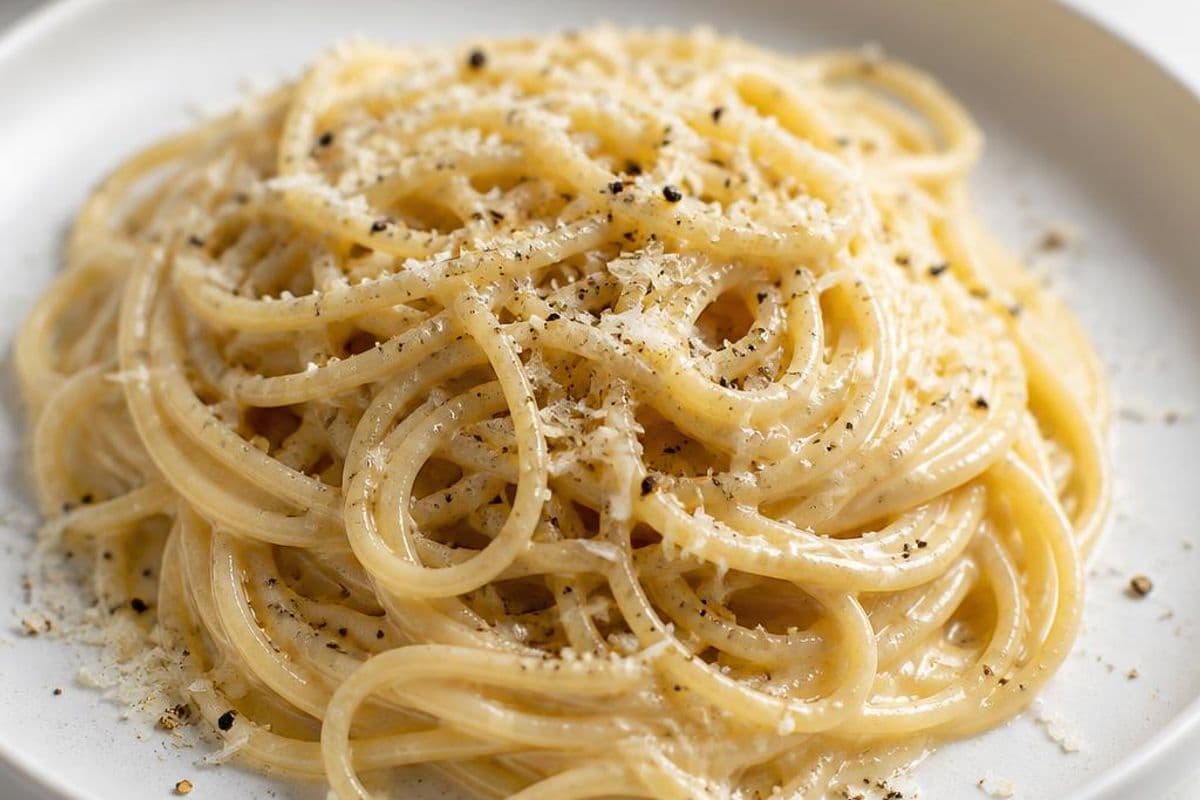
A classic Roman pasta of just three stars — Pecorino Romano, freshly cracked black pepper and pasta water — transformed into a glossy, peppery sauce. Ready in under 20 minutes and utterly moreish.
Cacio e pepe is Roman comfort in its purest form — three pantry ingredients, one very particular technique, and you’ve got dinner. It’s the culinary equivalent of a good one-liner: simple, cheeky and impossible to forget.
Make this when you want something quick but impressive — a late-week supper, date-night pasta or when you want to show off what a little technique can do. The trick is in the emulsion: hot starchy water + finely grated Pecorino + gentle tossing = silky sauce. Nail that and you're basically Roman royalty.
Ingredients
- 200 g spaghetti (or tonnarelli/bucatini)
- 100 g Pecorino Romano, finely grated — finely grated (about 1 packed cup)
- 25 ml black peppercorns — whole, to be toasted and cracked
- 15 ml sea salt (for the pasta water) — or to taste
- reserved pasta cooking water — reserve about 300–400 ml (1 1/4–1 3/4 cups)
- 10 g unsalted butter (optional) — adds silkiness but not traditional
- 30 ml extra Pecorino for serving — optional
Equipment
- large heavy-based frying pan or sauté pan
- large pot for boiling pasta
- microplane or fine box grater
- mortar and pestle or rolling pin (for crushing pepper)
- tongs
Instructions
Put a large pot (at least 4–5 litres) of water on to boil. When it reaches a rolling boil add the tablespoon of sea salt and then the spaghetti. Stir to prevent sticking.
While the water heats/cooks, toast the peppercorns in a dry heavy frying pan over medium heat until aromatic — about 90–120 seconds. Shake the pan or stir; don’t let them burn.
Crack the toasted pepper coarse using a mortar and pestle or a rolling pin (or set your pepper mill to coarse). You want a mix of cracked and slightly finer bits so the flavour blooms in the sauce.
Cook the spaghetti to 1–2 minutes shy of the package's al dente time (for most spaghettis this is about 8–9 minutes). Stir occasionally so it cooks evenly.
Reserve 300–400 ml (about 1 1/4–1 3/4 cups) of the starchy cooking water, then drain the pasta (no rinsing).
Put the frying pan you used for the pepper back over medium heat. Add about 75–100 ml (1/3–1/2 cup) of the reserved hot pasta water and the cracked pepper. Let it simmer 20–30 seconds to bloom the pepper.
Add the drained pasta to the pan and toss vigorously for about 30 seconds so each strand is coated in the peppery water.
Turn the heat to very low or remove the pan from the heat. Gradually sprinkle in about two-thirds of the grated Pecorino while tossing or stirring continuously. Add more reserved hot water, a little at a time (1–2 tbsp / 15–30 ml), to loosen the mixture and create a creamy emulsion. Keep adding cheese and water until the sauce is silky and clings to the pasta. If using, add the butter here and whisk/toss to incorporate.
Taste and adjust — add a little more pepper if you like it punchy, or a splash more hot water if the sauce is too thick. Plate immediately, finishing with the remaining Pecorino and a little extra cracked black pepper.
Tips
- Grate the Pecorino as finely as you can (microplane if possible). Coarse or pre-grated cheese will clump and won’t melt smoothly.
- Always add the cheese off or over very low heat and introduce hot pasta water slowly. Temperature control makes or breaks the sauce.
- Reserve more pasta water than you expect — it’s the glue for the emulsion. If the sauce tightens up, add a splash and keep tossing.
- Toast and crush the pepper yourself. Freshly cracked pepper has essential oils that make the dish sing; pre-ground pepper is flat.
- Serve immediately. The sauce is at its best right away; it will thicken as it cools and become pasty if left standing.
Substitutions
spaghetti → bucatini or tonnarelli (same quantity)
Stays closePecorino Romano → Parmigiano-Reggiano (use slightly less, ~80–90 g)
Noticeably differentblack peppercorns → coarsely ground black pepper (from a mill)
Stays closeunsalted butter (optional) → a drizzle (1 tsp) of extra virgin olive oil
Stays close
Nutrition
Per serving · estimated
- 540
- Calories
- 27 g
- Protein
- 74 g
- Carbs
- 14 g
- Fat
- 3 g
- Fibre
- 2 g
- Sugar
- 900 mg
- Sodium
FAQ
Why did my sauce seize and become grainy?
That happens when the cheese is exposed to too-high heat or added too quickly. Cool the pan slightly, add more hot starchy water and whisk/toss vigorously. Next time, add cheese off heat and introduce water slowly.
How much pasta water should I reserve?
Reserve about 300–400 ml (1 1/4–1 3/4 cups). You’ll use only some of it, but having extra lets you loosen the sauce as needed without stopping service.
Can I make cacio e pepe ahead of time?
Not really — it’s best fresh. The emulsion breaks and the sauce firms up as it cools. You can grate cheese and toast pepper in advance, but finish and serve immediately.
Is Pecorino Romano essential?
Pecorino is traditional and gives the sharp, salty character. Parmesan works in a pinch but the flavour will be milder and less tangy.
Community Photos
No photos yet
Be the first to share your creation!